
How Long Does THCA Stay In Your System: Urine Test

Wondering how long THCA stays in your system? You’re not alone; many people across Indiana have the same concern, especially when preparing for job screenings, legal check-ins, or just wanting to make informed choices. THCA is the raw, non-psychoactive form of THC, but it still shows up on standard drug tests after it converts in the body. THCA is detectable in urine for 3 to 15 days, and in frequent users, for up to 30 days or more. A 2023 state youth survey in Indiana found nearly 2% of middle schoolers and over 10% of high schoolers reported trying delta‑THC products.
The length of time THCA remains detectable depends on several factors, including how it’s used, your metabolism, and the type of test being conducted, such as urine, blood, saliva, or hair testing.
Knowing the detection window is important. It helps you stay prepared, avoid surprises, and make confident decisions about your health or legal responsibilities.
What is THCA?
THCA (tetrahydrocannabinolic acid) is the non-psychoactive precursor to THC, the primary intoxicating compound in cannabis. Found naturally in raw cannabis plants, THCA converts to THC when exposed to heat through smoking, vaping, or cooking. THCA is available in various over-the-counter forms, primarily as raw flower, tinctures, capsules, or edibles marketed under hemp-derived or cannabis wellness products. It is classified as a cannabinoid and promoted for its potential anti-inflammatory, neuroprotective, and antiemetic properties. THCA is not available in injectable form and is consumed orally or through raw juicing.
Did you know most health insurance plans cover substance use disorder treatment? Check your coverage online now.
How Long Does THCA Stay In Your System for a Urine Test After Quitting?
THCA stays in your system for 3 to 30 days, for urine, blood, hair, or saliva testing. For urine tests, the most commonly used, THCA is detected for 3 to 15 days in occasional users, and up to 30 days or more in regular or long-term users. These timelines vary based on factors such as frequency of use, metabolism, body fat, hydration levels, and overall health. Since THCA converts to THC when exposed to heat, many standard drug tests register it as a positive result for THC metabolites. This is especially important for individuals subject to routine screenings in workplaces, legal settings, or recovery programs. Understanding these detection windows helps you make informed choices after quitting and avoid unintended consequences.
How is THCA Processed in the Body?
THCA is processed in the body through the digestive system when consumed in its raw form. Unlike THC, it does not readily cross the blood-brain barrier and does not cause psychoactive effects unless it is heated. When THCA is exposed to heat, through smoking, vaping, or cooking, it undergoes a chemical process called decarboxylation, converting into THC, the active compound responsible for the “high.” Once converted to THC, the body metabolizes it in the liver, where enzymes like CYP2C9 and CYP3A4 break it down into various metabolites, including 11-OH-THC and THC-COOH. These are then circulated through the bloodstream and eventually excreted through urine and feces. If THCA is consumed without heat, much of it passes through the body without significant conversion, though small amounts still appear in drug screenings due to trace decarboxylation during digestion or lab testing.
What Tests are Done to Detect THCA In the Body in Indiana?
The tests done to detect THCA in the body are urine, blood, hair, and saliva tests. Each method varies in sensitivity, detection window, and practicality, depending on the purpose, such as workplace screening, legal compliance, or medical monitoring.

- Urine Testing: Detection window is 3 to 15 days for occasional users, up to 30+ days for chronic users. Urine testing is the most common method used due to its non-invasive nature and cost-effectiveness. It detects THC-COOH, a metabolite resulting from THCA decarboxylation. According to a 2020 Forensic Science International study, THC-COOH levels in urine persist for over 30 days in heavy users [source: FSI, 2020].
- Blood Testing: Detection window is 1 to 3 days after use. Blood tests are less commonly used but help detect recent exposure. THCA itself is short-lived in the bloodstream. Its half-life is less than 24 hours, and it usually becomes undetectable within 72 hours unless used chronically.
- Hair Testing: Detection window is up to 90 days or more. Hair testing offers the longest detection window by identifying THCA metabolites deposited in hair follicles. Though less commonly used, it is favored in legal or forensic cases.
- Saliva Testing: Detection window is up to 24 hours. Saliva tests detect recent use and are used in roadside or immediate screening scenarios. Since THCA is not active unless heated, its conversion product (THC) is more likely to show up. A Journal of Analytical Toxicology study by Sebastien Anizan et al., 2014) showed that oral fluid tests detect cannabinoids within minutes to 24 hours post-use.
These tests collectively provide different windows of detection, helping institutions tailor screening based on timing, frequency of use, and regulatory needs.
Contact us today to schedule an initial assessment or to learn more about our services. Whether you are seeking intensive outpatient care or simply need guidance on your mental health journey, we are here to help.
What are the Factors That Influence THCA Detection Time?
The factors that influence THCA detection time are the amount used, frequency of use, metabolism, body composition, genetics, hydration, and test type. These variables play a vital role in how long THCA (or its metabolites) linger in your system.
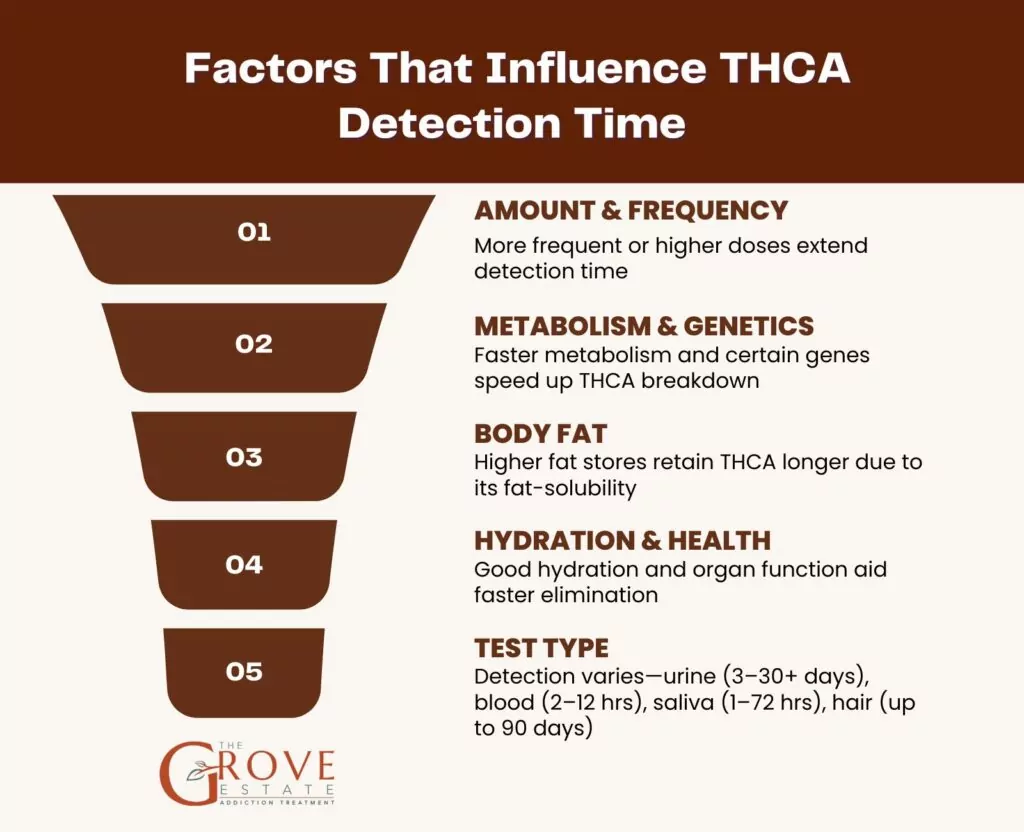
Amount and Frequency of Use: Larger doses and more frequent use lead to accumulation, extending detection windows significantly, from just a few days in occasional use to 30+ days in chronic users.
Metabolism & Genetics: Faster metabolisms clear cannabinoids quicker. Genetic differences in liver enzymes like CYP2C9 and CYP3A4 also affect how rapidly THCA is broken down.
Body Fat Percentage: THCA metabolites are fat-soluble, so individuals with higher body fat retain them longer as they accumulate in fatty tissue and are released slowly
Hydration & Health: Proper hydration and general health support faster elimination via urine and feces. Dehydration or poor liver/kidney function slows clearance.
Type of Drug Test Used: Detection windows vary by test type: urine (3–30+ days), blood (2–12 hours), saliva (1–72 hours), and hair (up to 90 days), depending on usage patterns and individual factors.
What Is the Half-life of THCA?
The half-life of THCA refers to the time it takes for half of the compound to be eliminated from the bloodstream. Although THCA’s half-life in the bloodstream is relatively shorter than THC, under 24 hours in most individuals. However, when THCA is converted into THC and then metabolized into THC-COOH (the primary metabolite screened in urine tests), the effective detection period lasts significantly longer, especially in frequent users. A short half-life usually means a drug clears from blood and saliva more quickly, which limits its detectability in those methods. However, because metabolites linger in fat tissues, THCA’s decarboxylated byproducts are still detected in urine or hair long after the original compound has left the bloodstream, affecting test reliability based on usage patterns.
Are There Withdrawal Symptoms With THCA?
No, there are withdrawal symptoms with THCA, as it is non-psychoactive and does not bind directly to cannabinoid receptors like THC does. However, if THCA products are decarboxylated (converted to THC through heat) and used frequently, THC-related withdrawal symptoms occur. Symptoms such as irritability, anxiety, sleep issues, decreased appetite, and mood swings begin within 24–72 hours after stopping, peak around days 2–6, and usually resolve within 1 to 2 weeks.
Are you covered for treatment?
The Grove Estate is an approved provider for Blue Cross Blue Shield and Cigna, while also accepting many other major insurance carriers.
Check Coverage Now!How to Get Treatment for THCA in Indiana?
To get treatment for THCA in Indiana, you must begin by connecting with licensed addiction services that specialize in cannabinoid-related concerns. These programs offer evidence-based care that focuses on both the physical and psychological aspects of substance misuse. Whether use is recreational or linked to chronic dependence, Indiana has a range of services to support safe detox and long-term recovery.
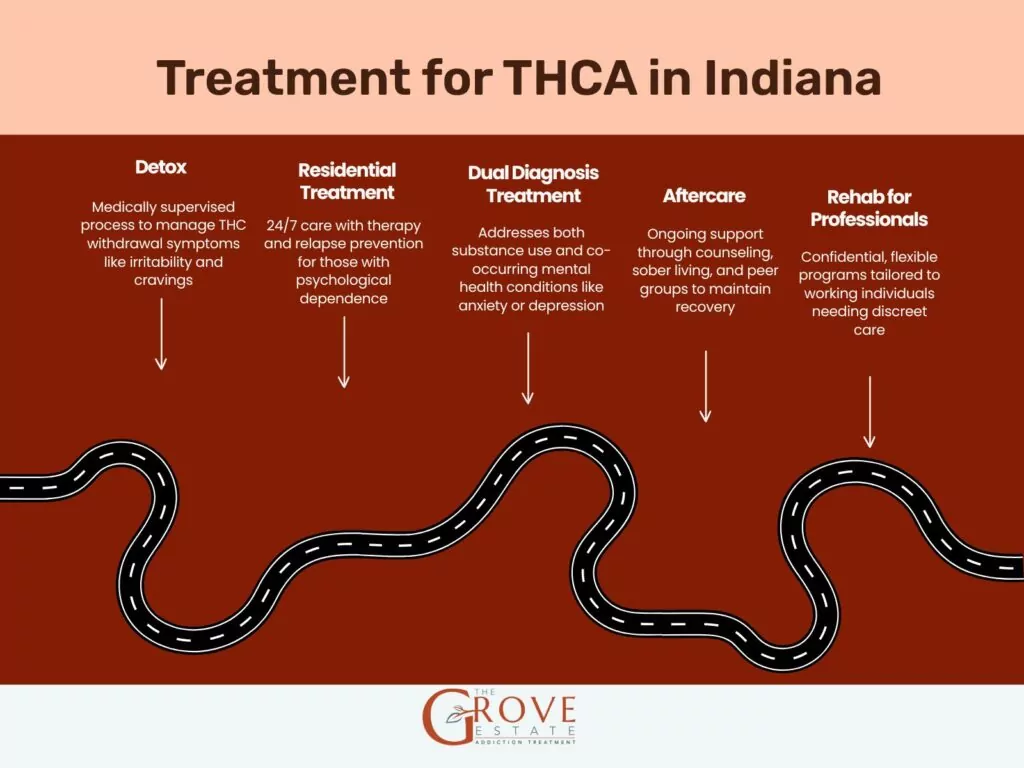
Here are the THCA treatment options in Indiana:
- Detox: Detox is a vital first step in managing THCA misuse, especially in cases involving high-THC conversion from regular heating or smoking of THCA-rich products. While THCA alone does not trigger withdrawal, the THC byproduct leads to symptoms like irritability, insomnia, or cravings. A medically supervised detox helps manage these symptoms safely, preparing individuals for continued care.
- Residential Treatment: Residential programs provide 24/7 supervision and structured support for individuals who have developed psychological dependence on THCA or THC products. These settings offer behavioral therapy, skill-building groups, and relapse prevention strategies tailored to cannabinoid misuse.
- Dual Diagnosis Treatment: Individuals misusing THCA face underlying conditions such as anxiety, depression, or trauma. Dual diagnosis programs in Indiana treat both substance use and co-occurring mental health disorders, improving emotional stability and treatment outcomes. Facilities like The Grove offer specialized Dual diagnosis treatment for individuals navigating complex challenges.
- Aftercare: Sustaining recovery after treatment is key. Aftercare services in Indiana include outpatient counseling, sober living homes, peer support groups like SMART Recovery or Marijuana Anonymous, and continued mental health care. These services help individuals maintain progress and reduce the risk of relapse.
- Rehab for Professionals: Working professionals need discreet, tailored care that fits their schedules. Indiana-based rehab centers offer specialized tracks for healthcare workers, educators, or first responders, combining confidentiality with stress management tools and return-to-work planning.
Does THCA show up on a drug test?
Yes, THCS does show up on a drug test. While THCA itself is non-psychoactive, it still shows up on a drug test, particularly if it has been converted to THC through heat (smoking, vaping, or cooking). Standard drug tests, especially urine screenings, do not specifically test for THCA but detect THC metabolites (like THC-COOH), which result from consuming THCA-rich products. Therefore, using THCA in any form that involves heat or leads to THC conversion produces a positive test result.
How Does THCA Compare to THC in Terms of Detection Times?
THCA compares to THC in terms of detection times, but not significantly when THCA is converted to THC. On its own, THCA has a shorter presence in the bloodstream and is excreted more quickly due to limited absorption and no psychoactive activity. However, once THCA is heated and converted into THC, a common method of use, it is metabolized like THC and produces the same detectable metabolites (like THC-COOH). In that case, detection times become nearly identical, with THC metabolites appearing in urine for 3 to 30+ days, depending on use frequency. So, while raw THCA clears faster, any form that converts to THC follows THC’s longer detection window.
Rediscover Life at The Grove Estate
Get the compassionate mental health support you deserve. We're here to help you reclaim joy, wellness, and a brighter future.
Our Facility
Can THCA be Detected After a Week?
Yes. THCA can be detected after a week, especially if it has been used frequently or converted to THC through heat. Once metabolized, its byproducts, primarily THC-COOH, remain in the body and are detectable in urine for 7 days or more, particularly in regular users. Even though THCA itself is non-psychoactive, its potential to produce a positive drug test result persists beyond a week under common usage patterns.
What Is the Elimination Process for THCA?
THCA is eliminated from the body through metabolism and excretion via urine and feces. When consumed raw, much of THCA passes through the digestive system with minimal absorption. However, when heated and converted into THC, it undergoes liver metabolism, primarily via enzymes like CYP2C9 and CYP3A4, and is broken down into THC-COOH, the metabolite most commonly detected in drug tests. These metabolites are then gradually excreted through the kidneys (urine) and the digestive tract (feces). The elimination rate depends on factors such as frequency of use, body fat, metabolism, and hydration.
Is THCA Addictive?
No. THCA itself is not considered addictive, as it does not produce psychoactive effects or stimulate the brain’s reward system like THC. However, when THCA is heated and converted into THC, through smoking, vaping, or cooking, it leads to THC-related dependence with frequent use. In such cases, users develop tolerance, psychological cravings, or withdrawal symptoms, which are linked to THC, not THCA in its raw form.
Share This Post

The Grove Editorial Team
All author posts
ADDICTION TREATMENTS IN INDIANA
Are you covered for treatment?







The Grove Estate is an approved provider for Blue Shield of California and Cigna, while also accepting many other major insurance carriers.
Check Coverage Now!