
Can You Drink on Zoloft? Sertraline and Alcohol Risks

No, you should avoid drinking alcohol while taking Zoloft or Sertraline.
Drinking on Zoloft (sertraline) amplifies CNS sedation and worsens the depression the medication treats.
Alcohol interferes with sertraline’s mechanism of action through competing effects on serotonergic neurotransmission. The FDA’s prescribing information for sertraline specifically states that alcohol use is not recommended during treatment.
Understanding why alcohol and sertraline interact, what the actual pharmacological risks are, and why skipping a dose before drinking does not eliminate the interaction helps people on Zoloft make genuinely informed decisions.
Key Takeaways
- The FDA prescribing information for sertraline (Zoloft) states that concomitant use of alcohol is not recommended during sertraline treatment.
- Indiana adults reported elevated alcohol use in 2023, with the state ranking 16th nationally for excessive drinking according to America’s Health Rankings, underscoring the regional treatment need.
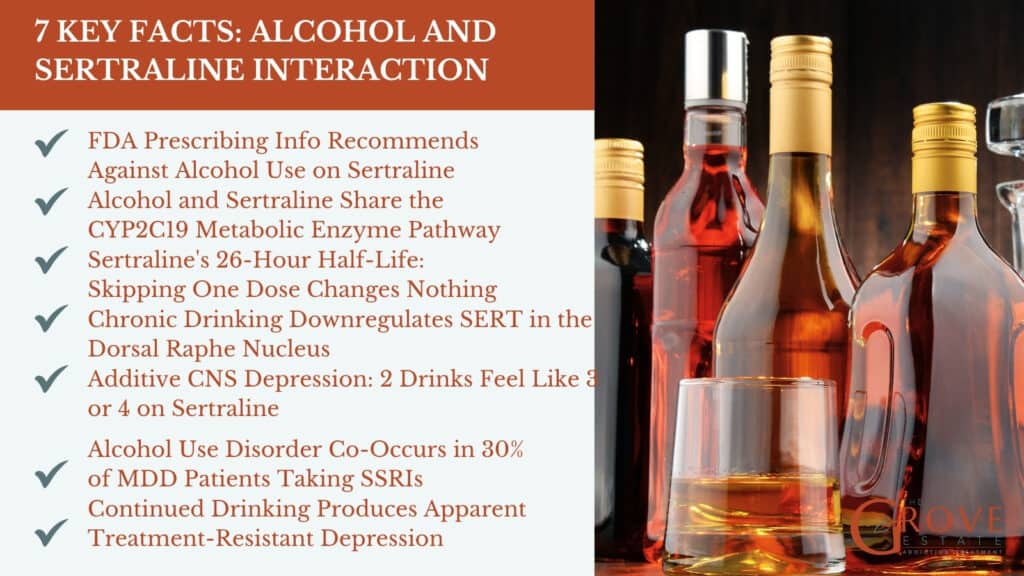
- Alcohol and sertraline share the CYP2C19 hepatic enzyme pathway; concurrent use elevates sertraline plasma concentrations unpredictably, increasing both therapeutic and adverse effects in ways that cannot be managed by dose adjustment alone.
- According to the National Institute of Mental Health, major depressive disorder (MDD) affects approximately 21 million adults in the United States and alcohol use disorder co-occurs in an estimated 30% of people with MDD.
- Skipping a sertraline dose before drinking does not eliminate the interaction risk: sertraline has a half-life of approximately 26 hours, meaning a single missed dose leaves the drug at approximately 97% of steady-state plasma concentration when the missed dose would have been taken.
- Chronic alcohol consumption downregulates serotonin transporter (SERT) expression in the dorsal raphe nucleus, directly antagonizing sertraline’s primary mechanism of action and progressively reducing the medication’s antidepressant efficacy with continued drinking.
Did you know most health insurance plans cover substance use disorder treatment? Check your coverage online now.
What Is Zoloft (Sertraline) and How It Works
Zoloft is the brand name for sertraline hydrochloride, the most commonly prescribed antidepressant in the United States and one of the most prescribed medications overall, with over 37 million prescriptions dispensed annually. Understanding sertraline’s mechanism establishes why alcohol specifically disrupts its therapeutic action rather than simply adding to it.
Sertraline’s Mechanism: Serotonin Transporter Inhibition
Sertraline is a selective serotonin reuptake inhibitor (SSRI) that produces its antidepressant effect by binding to and blocking the serotonin transporter (SERT), the protein responsible for clearing serotonin from the synaptic cleft and returning it to the presynaptic neuron. SERT inhibition by sertraline increases the time serotonin remains in the synapse, enhancing serotonergic neurotransmission at postsynaptic 5-HT1A and 5-HT2A receptors in the limbic system and prefrontal cortex.
The monoamine hypothesis of depression, foundational to understanding SSRI therapy, proposes that insufficient synaptic serotonin activity underlies the anhedonia, persistent low mood, and cognitive slowing that define major depressive disorder (MDD). Sertraline’s SERT inhibition corrects this deficit over 4 to 6 weeks of consistent dosing as postsynaptic serotonin receptors adapt to chronically elevated synaptic serotonin.
Approved Uses and DSM-5 Diagnoses Treated
The FDA approved sertraline for six indications: major depressive disorder (MDD), obsessive-compulsive disorder (OCD), panic disorder, post-traumatic stress disorder (PTSD), social anxiety disorder, and premenstrual dysphoric disorder (PMDD). Off-label use extends to generalized anxiety disorder (GAD), where sertraline produces comparable anxiety reduction to its MDD efficacy through the same SERT inhibition mechanism operating in limbic anxiety circuits.
Sertraline is prescribed at initial doses of 25 to 50 mg daily, titrated toward a typical therapeutic dose range of 50 to 200 mg. Its half-life of approximately 26 hours supports once-daily dosing. The active metabolite desmethylsertraline contributes additional SERT inhibition with a half-life of 62 to 104 hours, meaning the drug’s pharmacological presence extends substantially beyond sertraline itself.
Contact us today to schedule an initial assessment or to learn more about our services. Whether you are seeking intensive outpatient care or simply need guidance on your mental health journey, we are here to help.
How Alcohol and Sertraline Interact in the Body
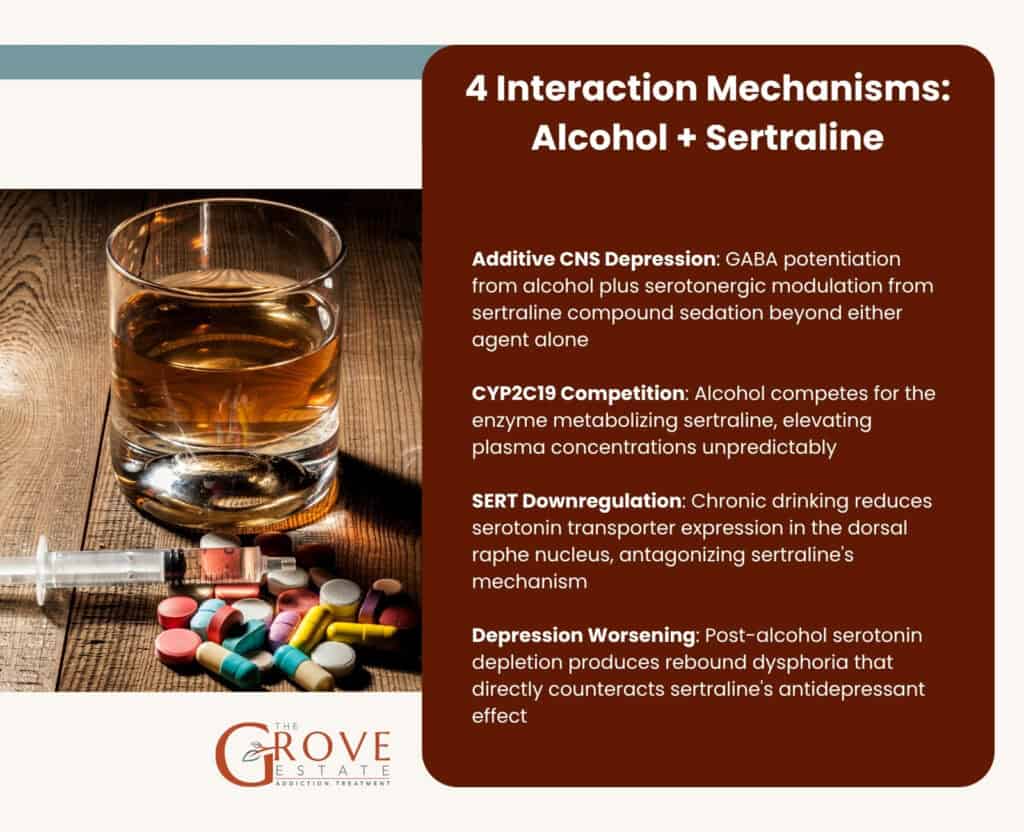
Alcohol and sertraline interact through four distinct pharmacological mechanisms, each capable of producing adverse outcomes independently and compounding each other when drinking occurs at the same time as sertraline dosing.
Additive CNS Depression
Both alcohol and sertraline produce central nervous system depression, though through different pathways. Alcohol potentiates gamma-aminobutyric acid (GABA) activity at GABA-A receptors throughout the brain, producing the sedation, psychomotor impairment, and cognitive slowing characteristic of intoxication. Sertraline independently reduces CNS excitability through serotonergic modulation. When combined, alcohol’s GABA potentiation and sertraline’s serotonergic CNS depression produce additive sedation that exceeds what either agent causes alone.
The practical result is that people on sertraline experience alcohol’s sedating and impairing effects at lower blood alcohol concentrations than they would off the medication. Two drinks produce the same psychomotor impairment that three or four might have produced before starting sertraline, a shift that most patients are not informed about and that elevates driving impairment and accident risk substantially.
CYP2C19 Enzyme Competition
Sertraline undergoes primary hepatic metabolism through CYP2C19, the cytochrome P450 enzyme that also metabolizes alcohol at moderate consumption levels. Concurrent alcohol and sertraline use creates competition for CYP2C19 enzymatic capacity, reducing sertraline’s metabolic clearance rate and elevating its plasma concentration above the expected steady-state level for a given dose. This enzyme competition increases sertraline exposure in a dose-dependent, unpredictable manner that varies by individual CYP2C19 genotype, drinking amount, and drinking frequency.
CYP2C19 poor metabolizers, individuals carrying genetic variants that reduce CYP2C19 activity, experience the most pronounced sertraline plasma elevation when drinking because their baseline enzyme capacity is already diminished. For these individuals, concurrent alcohol use can produce sertraline toxicity symptoms including severe nausea, tremor, and cardiac effects at doses that would be well tolerated under alcohol-free conditions.
Are you covered for treatment?
The Grove Estate is an approved provider for Blue Cross Blue Shield and Cigna, while also accepting many other major insurance carriers.
Check Coverage Now!Serotonin Dysregulation from Chronic Drinking
Acute alcohol consumption transiently increases serotonin release in the nucleus accumbens, producing a brief serotonergic surge that interacts with sertraline’s SERT inhibition. Chronic heavy drinking, by contrast, depletes presynaptic serotonin stores and downregulates SERT expression in the dorsal raphe nucleus, the brain’s primary serotonin production center.
This chronic depletion directly antagonizes sertraline’s mechanism: a drug that works by preserving synaptic serotonin cannot produce antidepressant benefit when the presynaptic serotonin supply chronic drinking has depleted is insufficient to maintain therapeutic concentrations regardless of SERT inhibition level.
Peter Kranzler, MD, whose research at the University of Pennsylvania Center for Studies of Addiction has examined the neurobiological intersection of alcohol use disorder and antidepressant pharmacotherapy, documented that heavy alcohol use significantly attenuates SSRI antidepressant response by disrupting the serotonergic substrate SSRIs require.
Worsening of Underlying Depression
Alcohol is a CNS depressant that worsens major depressive disorder through multiple neurobiological mechanisms independent of its sertraline interaction. Alcohol reduces prefrontal cortical serotonin and dopamine activity during the post-drinking period, producing rebound dysphoria, irritability, and anhedonia that can last 24 to 72 hours after the acute intoxication resolves. For individuals taking sertraline for MDD, this alcohol-driven mood worsening actively counteracts the gradual serotonergic stabilization sertraline produces.
The net clinical effect of concurrent alcohol use during sertraline therapy is medication failure that appears to be treatment resistance. The Patient Health Questionnaire-9 (PHQ-9), the standard nine-item depression severity scale used to monitor sertraline response, consistently fails to show meaningful score reduction in patients who continue drinking, not because sertraline is ineffective, but because alcohol’s depressogenic effects outpace the drug’s therapeutic action.
What Happens When You Drink on Zoloft
The specific effects of combining alcohol and sertraline depend on drinking amount, sertraline dose, duration of sertraline use, individual CYP2C19 genotype, and whether drinking is occasional or chronic.
Rediscover Life at The Grove Estate
Get the compassionate mental health support you deserve. We're here to help you reclaim joy, wellness, and a brighter future.
Our Facility
Effects of Light to Moderate Drinking
Even light drinking (one to two standard drinks) while on sertraline produces measurable pharmacological effects beyond those of alcohol alone:
- Enhanced sedation: The additive CNS depression from combined GABA potentiation and serotonergic modulation produces drowsiness, cognitive slowing, and reaction time impairment at blood alcohol levels that would not impair a sertraline-naive individual equally
- Reduced inhibitions: Sertraline’s anxiolytic effects combined with alcohol’s disinhibiting properties can lower behavioral inhibition beyond what alcohol alone produces at equivalent doses
- Mood instability in the post-drinking period: Alcohol-induced serotonin depletion during the metabolic clearance period (the hangover phase) produces mood dips that interrupt the gradual serotonergic stabilization sertraline produces with consistent dosing
Effects of Heavy or Chronic Drinking
Heavy or chronic alcohol use while on sertraline produces more significant clinical consequences:
- Antidepressant treatment failure: Chronic alcohol-driven SERT downregulation and serotonin depletion directly antagonize sertraline’s mechanism, producing apparent treatment resistance that resolves with alcohol cessation
- Serotonin dysregulation: Repeated cycles of alcohol-induced serotonin surge followed by depletion disrupts the stable serotonergic environment that sertraline’s SERT inhibition requires to produce therapeutic benefit
- Elevated sertraline plasma levels: Chronic heavy drinking impairs CYP2C19 metabolic capacity through hepatic damage, elevating sertraline plasma concentrations above therapeutic levels and increasing adverse effect burden
Side Effects of Combining Alcohol and Sertraline
Combining alcohol and sertraline produces a predictable range of adverse effects that intensifies with drinking amount and frequency, extending from manageable sedation at light drinking levels to serious clinical complications with heavy use.

Did you know most health insurance plans cover substance use disorder treatment? Check your coverage online now.
Common Side Effects
Common side effects from combining alcohol and sertraline include:
- Excessive sedation and fatigue: Additive CNS depression produces drowsiness, cognitive fog, and psychomotor slowing exceeding what sertraline or alcohol causes independently at the same doses
- Nausea and gastrointestinal distress: Alcohol irritates gastric mucosa, and sertraline’s serotonergic effects increase GI motility; the combination produces nausea, diarrhea, and abdominal discomfort more frequently than either substance alone
- Worsened anxiety after drinking: Post-alcohol serotonin depletion during the clearance phase produces rebound anxiety that can temporarily worsen generalized anxiety disorder or panic disorder symptoms sertraline was prescribed to treat
- Impaired coordination and judgment: The combined sedative burden increases fall risk, accident risk, and decision-making impairment beyond what blood alcohol concentration alone predicts
Severe Effects Requiring Urgent Attention
Serious adverse reactions from the sertraline-alcohol combination, while less common with light drinking, become substantially more likely with heavy episodic or chronic drinking.
Seek urgent medical attention if any of the following develop:
- Serotonin syndrome signs: fever, agitation, muscle twitching, rapid heart rate, and diaphoresis occurring during or after drinking on sertraline
- Severe confusion or disorientation not proportionate to the amount consumed
- Suicidal ideation, particularly during the post-drinking period when serotonin rebound dysphoria peaks
- Seizures in individuals who have been escalating alcohol consumption while on sertraline
- Sertraline toxicity signs: severe nausea, vomiting, tremor, and cardiac palpitations following drinking on sertraline
Serotonin syndrome risk from sertraline and alcohol at high levels merits clinical awareness, though the primary serotonin syndrome risk with sertraline involves combination with other serotonergic agents such as MAOIs, tramadol, and triptans rather than alcohol alone. Heavy alcohol consumption in the context of sertraline use can unpredictably alter the serotonergic environment in ways that increase serotonin-related toxicity risk, particularly in CYP2C19 poor metabolizers whose sertraline plasma levels are already elevated.
Long-Term Risks: Alcohol Use Disorder and Treatment-Resistant Depression
Continued alcohol use during sertraline treatment produces a self-reinforcing cycle: alcohol worsens depression by depleting serotonin stores, the worsened depression increases the emotional drive to drink for relief, and the increased drinking further undermines sertraline’s efficacy. This bidirectional relationship between alcohol use disorder (AUD) and major depressive disorder explains why approximately 30% of MDD patients also meet DSM-5 criteria for AUD, and why treating only one disorder while the other continues active produces poor outcomes for both.
Long-term heavy alcohol use in individuals taking sertraline also produces alcohol use disorder-related complications including hepatic injury, which further impairs CYP2C19 sertraline metabolism, and alcohol-related cognitive impairment that amplifies the cognitive symptoms of depression. The integrated treatment of co-occurring alcohol use disorder and major depressive disorder through a dual diagnosis alcohol addiction treatment program produces substantially better outcomes than sequential treatment of each condition.
Contact us today to schedule an initial assessment or to learn more about our services. Whether you are seeking intensive outpatient care or simply need guidance on your mental health journey, we are here to help.
Treatment at The Grove Estate
The Grove Estate provides medically supervised residential treatment in Peru, Indiana for adults managing alcohol use disorder co-occurring with major depressive disorder, generalized anxiety disorder, or PTSD for which sertraline or other antidepressants have been prescribed. ASAM level of care criteria guide clinical placement.
Medical Detox Program
The Grove Estate’s medical detox program provides physician-prescribed medication protocols and 24-hour nursing oversight for alcohol withdrawal management. Alcohol withdrawal produces life-threatening autonomic instability including seizures and delirium tremens (DTs) in dependent drinkers, requiring medically supervised detox rather than unsupported cessation.
Concurrent sertraline and psychiatric medication management continues through the detox phase, ensuring that MDD treatment is not interrupted during the highest neurobiological-vulnerability window of early alcohol withdrawal.
Dual Diagnosis Treatment Program
The Grove Estate’s dual diagnosis treatment program provides integrated simultaneous treatment of alcohol use disorder and co-occurring depressive, anxiety, or trauma disorders within the same residential program. Licensed clinicians deliver individual counseling using CBT adapted to address the thought patterns driving both alcohol use and depression simultaneously, rather than treating the alcohol use disorder first and addressing depression afterward.
This integrated approach directly prevents the treatment failure produced by sequential care where depression drives relapse to alcohol before the psychiatric condition is adequately addressed.
Are you covered for treatment?
The Grove Estate is an approved provider for Blue Cross Blue Shield and Cigna, while also accepting many other major insurance carriers.
Check Coverage Now!Residential Rehabilitation Program
The Grove Estate’s residential rehabilitation program provides 24-hour structured care in a luxury Indiana sanctuary environment that removes patients from environmental triggers driving alcohol use. Educational programming covers the pharmacological interaction between alcohol and psychiatric medications including sertraline, building the clinical literacy that supports medication adherence and alcohol abstinence.
For working professionals managing alcohol use disorder and depression alongside career responsibilities, the professionals program provides confidential scheduling and career-sensitive treatment planning. The family program integrates family education on the alcohol-depression co-occurrence cycle to strengthen the post-discharge support structure.
Frequently Asked Questions
What happens if you drink alcohol with Zoloft?
Combining alcohol with sertraline produces additive CNS sedation, increased psychomotor impairment at lower blood alcohol levels than expected, CYP2C19 enzyme competition that elevates sertraline plasma concentrations, and disruption of the serotonergic environment sertraline requires for antidepressant efficacy. Even light drinking worsens depression through post-alcohol serotonin depletion. Heavy drinking produces antidepressant treatment failure, elevated sertraline toxicity risk, and accelerates the alcohol-depression co-occurrence cycle.
Rediscover Life at The Grove Estate
Get the compassionate mental health support you deserve. We're here to help you reclaim joy, wellness, and a brighter future.
Our FacilityCan I skip Zoloft for a day to drink?
Skipping sertraline for one day before drinking does not eliminate the interaction risk. Sertraline’s half-life of 26 hours means that a single missed dose leaves the drug at approximately 97% of steady-state plasma concentration at the time the dose would have been taken. Sertraline cannot be meaningfully cleared from the system by skipping one dose, and doing so risks discontinuation symptoms including dizziness, irritability, and electric shock sensations in the head.
What is the best alcohol to drink on sertraline?
No alcohol is “safe” to consume while taking sertraline. The FDA prescribing information explicitly recommends against alcohol use during sertraline treatment. There is no established minimum amount of alcohol that avoids all pharmacological interaction with sertraline. The sertraline-alcohol interaction involves CNS depression, enzyme competition, and serotonin disruption mechanisms that occur regardless of the type of alcoholic beverage consumed.
Why can’t you take alcohol with sertraline?
Alcohol is contraindicated during sertraline treatment because it worsens the depression sertraline treats, competes for the CYP2C19 enzyme that metabolizes sertraline, amplifies sertraline’s CNS sedation, and downregulates SERT expression with chronic use, directly antagonizing sertraline’s mechanism. The interaction operates through at least four distinct pharmacological pathways, any one of which would be sufficient clinical reason to recommend avoidance.
Did you know most health insurance plans cover substance use disorder treatment? Check your coverage online now.
How much alcohol is safe with Zoloft?
No established safe threshold for alcohol use during sertraline treatment exists. Clinical guidance universally recommends complete avoidance based on the FDA prescribing information. Individual variability in CYP2C19 genotype, sertraline dose, duration of therapy, and baseline depression severity makes predicting which individuals will experience significant adverse effects at light drinking levels impossible without pharmacogenomic testing.
Does alcohol make Zoloft less effective?
Yes. Chronic alcohol use directly reduces sertraline’s antidepressant efficacy through SERT downregulation in the dorsal raphe nucleus, depletion of presynaptic serotonin stores, and the depressogenic neurochemical effects of the post-drinking period. Patients who continue drinking while on sertraline frequently appear to have treatment-resistant depression. The apparent resistance typically resolves when alcohol use ceases and the serotonergic substrate sertraline needs to function is restored through abstinence.
Can you drink on sertraline 50mg?
No. Drinking on sertraline 50mg is not recommended. Even at this dose, combining alcohol with sertraline increases the risk of blackouts, memory lapses, and intensified side effects. Alcohol amplifies sertraline’s sedative effects and interferes with serotonin processing, worsening depression symptoms.
Contact us today to schedule an initial assessment or to learn more about our services. Whether you are seeking intensive outpatient care or simply need guidance on your mental health journey, we are here to help.
References
- U.S. Food and Drug Administration. (2023). Zoloft (sertraline hydrochloride) prescribing information. Pfizer. FDA Drug Label.
- National Institute of Mental Health. (2023). Major depression. https://www.nimh.nih.gov/health/statistics/major-depression
- Kessler, R. C., Crum, R. M., Warner, L. A., Nelson, C. B., Schulenberg, J., & Anthony, J. C. (1997). Lifetime co-occurrence of DSM-III-R alcohol abuse and dependence with other psychiatric disorders in the National Comorbidity Survey. Archives of General Psychiatry, 54(4), 313–321.
- Kranzler, H. R., & Soyka, M. (2018). Diagnosis and pharmacotherapy of alcohol use disorder: A review. JAMA, 320(8), 815–824.
- Substance Abuse and Mental Health Services Administration. (2023). Key substance use and mental health indicators in the United States: Results from the 2022 National Survey on Drug Use and Health. https://www.samhsa.gov/data/sites/default/files/reports/rpt42731/2022-nsduh-nnr.pdf
- American Psychiatric Association. (2022). Diagnostic and statistical manual of mental disorders (5th ed., text rev.). American Psychiatric Publishing.
- Naranjo, C. A., & Sellers, E. M. (1989). Serotonin uptake inhibitors attenuate ethanol intake in problem drinkers. Recent Developments in Alcoholism, 7, 255–266.
- Perucca, P., & Gilliam, F. G. (2012). Adverse effects of antiepileptic drugs. The Lancet Neurology, 11(9), 792–802.
Share This Post

The Grove Editorial Team
All author posts
ADDICTION TREATMENTS IN INDIANA
Are you covered for treatment?







The Grove Estate is an approved provider for Blue Shield of California and Cigna, while also accepting many other major insurance carriers.
Check Coverage Now!