
The Dangers of Mixing Alcohol and NyQuil

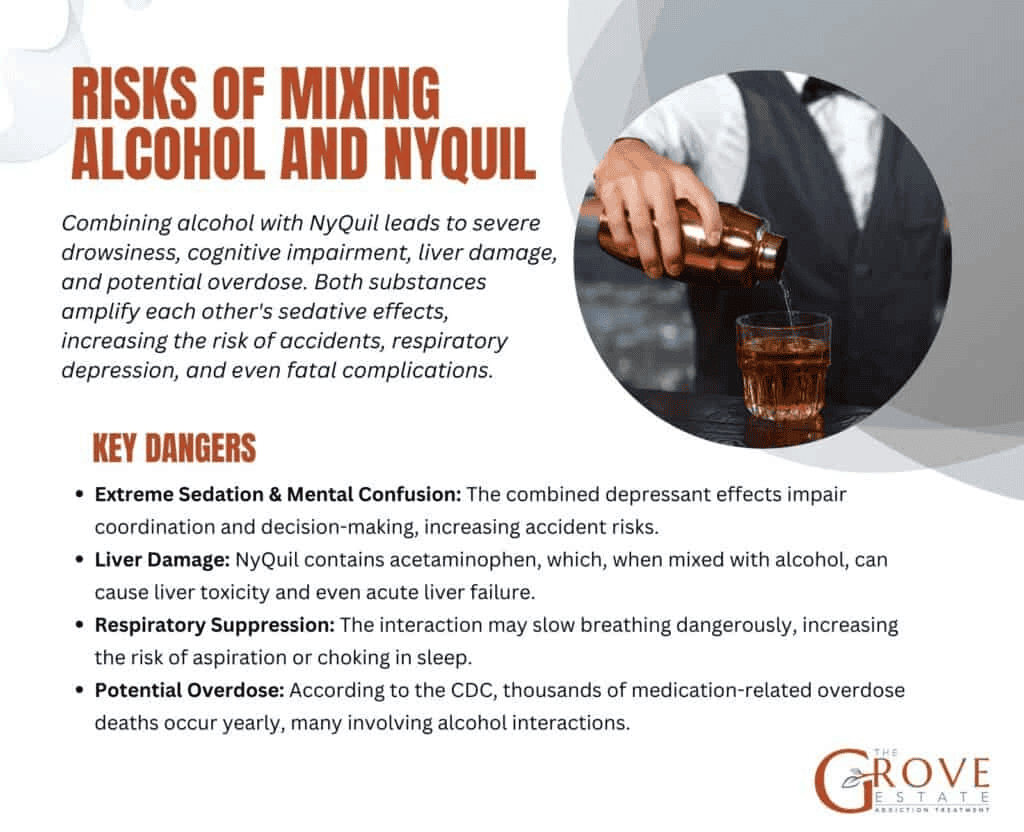
Mixing alcohol and NyQuil poses serious health risks that extend from short-term sedation to life-threatening complications such as liver failure, overdose, and impaired breathing. NyQuil contains acetaminophen, dextromethorphan, and doxylamine, ingredients that intensify alcohol’s depressant effects on the central nervous system.
Together, alcohol and NyQuil increase the likelihood of extreme drowsiness, confusion, and accidents, while long-term misuse leads to organ damage, addiction, and cognitive decline. Common misconceptions about alcohol and NyQuil, that combining these legal substances is safe or improves sleep, further heighten risk. Certain groups, including individuals with liver disease, diabetes, or mental health disorders, face an even greater danger when mixing these substances.
The consequences of mixing alcohol and NyQuil are not abstract. The Indiana State Department of Health reported that 1 in 3 acute liver failure cases involved alcohol-related acetaminophen toxicity in 2019 (ISDH, 2019). Understanding these dangers, especially in high-risk states like Indiana, is vital for prevention and timely medical intervention.
What Happens When Mixing Alcohol and NyQuil?
Mixing alcohol and NyQuil causes dangerous and potentially deadly side effects, including severe drowsiness, mental confusion, and liver damage.
The combination of alcohol and NyQuil intensifies the effects of both substances, creating a hazardous interaction that quickly leads to medical emergencies. While some view this combination as a sleep aid during illness, the mixture of alcohol and NyQuil poses serious health risks that far outweigh any perceived benefits.
According to the National Institute on Alcohol Abuse and Alcoholism (NIAAA), in 2019, approximately 14.5 million people aged 12 and older had Alcohol Use Disorder (AUD) in the United States. This high prevalence of AUD increases the likelihood of dangerous interactions between alcohol and medications like NyQuil.
The sedative effects of both alcohol and the active ingredients in NyQuil impair cognitive function and motor skills, increasing the risk of accidents and injuries. The sedation is so profound that it suppresses the body’s natural reflexes, such as the gag reflex. This raises the risk of choking or aspirating on vomit during sleep, a situation that has deadly consequences.
According to “Drug Overdose Deaths in the United States, 1999–2019,” published by the Centers for Disease Control and Prevention (CDC), in 2019, there were approximately 22,000 deaths in the United States involving prescription and OTC medications, with many of these deaths involving the concurrent use of alcohol.
Did you know most health insurance plans cover substance use disorder treatment? Check your coverage online now.
What Are the Risks of Mixing NyQuil with Alcohol?
The risks of mixing NyQuil with alcohol lead to liver damage, overdose, and worsened side effects like dizziness, drowsiness, and increased heart rate. Dextromethorphan (DXM), an active ingredient in NyQuil, when combined with alcohol, does lead to severe respiratory depression, which is life-threatening.
Short-Term Effects of Taking NyQuil While Drinking
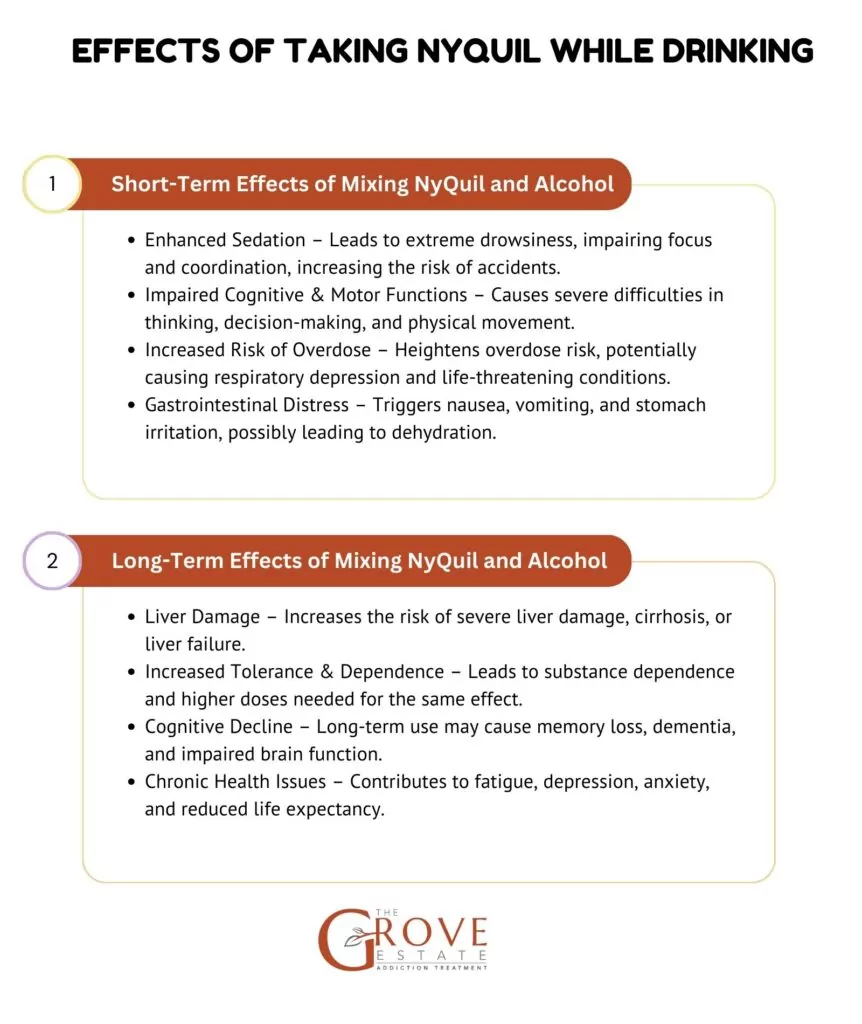
Here are the short-term effects of taking NyQuil while drinking:
1. Enhanced Sedation: Both NyQuil and alcohol have sedative effects. When combined, they lead to excessive drowsiness, making it difficult to stay awake and alert. This heightened sedation impairs your ability to perform tasks that require focus and coordination, such as driving or operating machinery, increasing the risk of accidents and injuries.
2. Impaired Cognitive and Motor Functions: The combination of dextromethorphan and doxylamine in NyQuil with alcohol will severely impair cognitive functions and motor skills. This impairment leads to difficulties in thinking, making decisions, and controlling physical movements, which is dangerous in everyday activities.
3. Increased Risk of Overdose: Alcohol enhances the effects of dextromethorphan, increasing the risk of overdose. Symptoms of overdose include nausea, vomiting, dizziness, and confusion. Severe cases lead to life-threatening conditions such as respiratory depression, where breathing becomes dangerously slow or even stops.
4. Gastrointestinal Distress: Combining NyQuil and alcohol causes stomach upset, nausea, and vomiting due to the irritant effects on the gastrointestinal tract. These symptoms lead to dehydration and electrolyte imbalances if severe or prolonged.
Long-Term Effects of Mixing NyQuil and Alcohol
1. Liver Damage: Both acetaminophen in NyQuil and alcohol are metabolized by the liver. Chronic use of this combination leads to severe liver damage or acute liver failure. Long-term liver damage results in conditions such as cirrhosis or liver cancer, which are life-threatening and require extensive medical treatment.
2. Increased Tolerance and Dependence: Regularly mixing NyQuil and alcohol leads to increased tolerance, meaning higher doses are needed to achieve the same effects, which further compounds health risks. This results in dependence on both substances, leading to substance use disorders that require professional treatment and intervention.
3. Cognitive Decline (e.g., Dementia): Prolonged use of alcohol and NyQuil together causes long-term cognitive impairment, alcoholic dementia affecting memory, attention, and executive functions. This cognitive decline impacts daily functioning, job performance, and quality of life, potentially leading to chronic mental health issues.
4. Chronic Health Issues: The combined depressant effects on the central nervous system lead to long-term health problems, including chronic fatigue, depression, and anxiety. These health issues require ongoing management and diminish overall well-being and life expectancy.
According to a GoodRx article titled “Can I Safely Drink Alcohol With NyQuil? “written by Phan. R et. al. 2021, alcohol also weakens your immune system. So, drinking while you’re sick will cause you to feel sick for longer. This is because your immune system isn’t able to fight off germs as effectively. It’s best to avoid drinking alcohol while you’re sick.
Contact us today to schedule an initial assessment or to learn more about our services. Whether you are seeking intensive outpatient care or simply need guidance on your mental health journey, we are here to help.
Who Should Be Extra Cautious When Combining NyQuil and Alcohol?
People who should be extra cautious when combining NyQuil and alcohol include those with liver conditions and individuals taking specific medications. These alcohol interactions lead to serious health complications for these high-risk groups, who are more susceptible to the combined side effects of both substances. Therefore, avoid drinking alcohol while taking NyQuil.
According to the Centers for Disease Control and Prevention (CDC), NyQuil contains 10% alcohol. When mixed with additional alcohol, it increases the risk of alcohol poisoning, which results in symptoms such as confusion, vomiting, seizures, slow breathing, and unconsciousness.

Here’s a list of specific health conditions that increase the risk when mixing alcohol with medications like NyQuil or other substances:
- Liver Disease: Conditions such as hepatitis, fatty liver disease, and cirrhosis are exacerbated by alcohol, which is metabolized by the liver.
- Chronic Kidney Disease: Alcohol affects kidney function, worsening existing kidney problems.
- Cardiovascular Diseases: Including hypertension (high blood pressure), heart failure, and arrhythmias (irregular heartbeat).
- Pancreatitis: Both acute and chronic pancreatitis are aggravated by alcohol drinking.
- Diabetes: Alcohol interferes with blood sugar levels and the effectiveness of diabetes medications.
- Epilepsy: Alcohol use increases the frequency of seizures for those with epilepsy.
- Mental Health Disorders: Conditions such as depression, anxiety, and bipolar disorder are worsened by alcohol use, especially when mixed with medications like NyQuil that also have central nervous system effects.
- Gastrointestinal Disorders: Such as gastroesophageal reflux disease (GERD) and ulcers, which are irritated by alcohol drinking.
- Respiratory Diseases: Chronic obstructive pulmonary disease (COPD) and asthma are negatively impacted by alcohol.
- Blood Disorders: Such as anemia, where alcohol use further impairs blood cell production.
What are the Common Misconceptions about NyQuil and Alcohol Addiction?
The common misconceptions about NyQuil and alcohol addiction include dangerous assumptions about legal substance safety, false beliefs about improved sleep quality, underestimating addiction potential, and dismissing occasional use risks.
Here are the common misconceptions about NyQuil and alcohol addiction:
- Misconception: “It’s safe because they’re both legal.”
Reality: Just because both NyQuil and alcohol are legal does not mean they are safe to use together. Their combination leads to dangerous interactions, including increased risk of liver damage and central nervous system depression. - Misconception: “Using NyQuil with alcohol will help me sleep better.”
Reality: While it might seem that mixing NyQuil with alcohol could enhance sleep due to their sedative effects, this combination disrupts sleep architecture and worsens sleep quality. It also increases the risk of respiratory depression during sleep. - Misconception: “Mixing NyQuil and alcohol isn’t addictive.”
Reality: Combining NyQuil and alcohol leads to a dependency on the mixture for sleep or relaxation, creating a cycle of addiction. The sedative effects are habit-forming, especially when used as a coping mechanism for stress or sleep problems. - Misconception: “If I don’t do it often, it’s not harmful.”
Reality: Even occasional use of NyQuil with alcohol is harmful due to the acute effects on the liver and potential for dangerous respiratory depression. The risk of adverse effects does not diminish with infrequent use.
What to Do If You’ve Mixed NyQuil and Alcohol?
If you or someone you know has mixed NyQuil and alcohol, it is important to immediately stop drinking both substances and make sure the person who has consumed them does the following:.
- Stop Consumption: Immediately cease the consumption of both NyQuil and alcohol.
- Assess Symptoms: Check for severe symptoms such as:
- Excessive drowsiness
- Difficulty breathing
- Confusion
- Irregular heartbeat
- Ensure Safety: Place the individual in a safe, comfortable environment where they are able to rest.
- Hydration: Encourage the person to drink water or clear fluids to stay hydrated.
- Monitor Alertness: Keep the person awake and alert, if possible.
- Supervision: Do not leave the individual alone until their condition stabilizes.
Are you covered for treatment?
The Grove Estate is an approved provider for Blue Cross Blue Shield and Cigna, while also accepting many other major insurance carriers.
Check Coverage Now!Is There Alcohol in Nyquil?
Yes, there is alcohol in some NyQuil products, but not all of them. The original liquid NyQuil contains approximately 10% alcohol, which is similar to the alcohol content in wine. However, NyQuil LiquiCaps are completely alcohol-free. Understanding this difference is important for consumers since alcohol in medications interacts with other substances, including alcoholic beverages.
When to Consult a Healthcare Professional in Indiana?
You should consult a healthcare professional in Indiana when severe symptoms arise from using NyQuil or when you suspect a potential overdose. You should also seek medical help if you have difficulty avoiding the combination of NyQuil and alcohol or notice recurring patterns of mixing these substances, as this indicates an underlying substance use disorder requiring professional attention.
Here are the symptoms you should look for:
- Severe Respiratory Distress: If you experience difficulty breathing or shortness of breath after using NyQuil or alcohol, it could be a sign of a serious reaction that requires immediate care.
- Unresponsiveness: If someone becomes unresponsive or difficult to wake up, this could indicate a life-threatening overdose, and emergency medical services should be contacted immediately.
- Seizures: The occurrence of seizures after taking NyQuil and alcohol together is a medical emergency and requires prompt intervention.
- Difficulty Refraining from Mixing NyQuil and Alcohol: If you find it challenging to avoid using these substances together, this indicates a developing dependency or substance use disorder.
- Noticeable Pattern of Substance Use: If you observe a pattern of regularly combining NyQuil with alcohol, it suggests a deeper issue with substance use, which a healthcare provider should address.
Should You Drink Alcohol While Taking DayQuil?
No, you should not drink alcohol while taking DayQuil. When you drink alcohol, it and DayQuil depress the central nervous system, which results in heightened drowsiness and impaired motor functions. Additionally, combining these substances significantly increases the risk of liver damage due to the acetaminophen present in DayQuil. The liver works to metabolize alcohol and acetaminophen, and the combined load leads to serious liver injury.
Rediscover Life at The Grove Estate
Get the compassionate mental health support you deserve. We're here to help you reclaim joy, wellness, and a brighter future.
Our Facility
How Long Should I Wait to Take Cold Medicine after Drinking Alcohol?
You should wait at least 24 hours to take cold medicine after drinking alcohol. This waiting period allows your body to metabolize the alcohol and reduces the risk of adverse interactions. The liver, which processes alcohol and cold medicine ingredients, needs time to recover and function effectively, minimizing the strain and potential for liver damage.
How Long Does NyQuil Drowsiness Last?
NyQuil-induced drowsiness lasts 6 to 8 hours, depending on individual metabolism and sensitivity to its sedative components, like doxylamine. The duration of drowsiness varies, but most individuals will experience the effects for this time frame, which is why NyQuil is recommended for nighttime use.
Can I Take NyQuil 6 Hours After Drinking?
No, you cannot take NyQuil six hours after drinking alcohol. The combination leads to severe drowsiness, increased liver stress, and a higher risk of adverse reactions. To avoid these dangers, it is better to ensure a more extended period between drinking alcohol and taking NyQuil, allowing the body adequate time to metabolize the alcohol and reduce the potential for harmful interactions.
Did you know most health insurance plans cover substance use disorder treatment? Check your coverage online now.
How Does the Combination of NyQuil and Alcohol Impact Sleep Quality?
The combination of NyQuil and alcohol severely impacts sleep quality by disrupting normal sleep patterns and preventing restorative rest. While NyQuil is designed to promote sleep during illness, and alcohol initially causes drowsiness, combining these substances significantly interferes with sleep architecture. This dangerous interaction leads to fragmented sleep cycles and blocks the crucial deep sleep phases needed for illness recovery.
For individuals struggling with sleep issues, whether from substance interactions or other causes, professional counseling offers effective support. Through counseling, people identify the root causes of their sleep difficulties and learn to implement science-backed sleep hygiene practices for better rest.
Share This Post

The Grove Editorial Team
All author posts
ADDICTION TREATMENTS IN INDIANA
Are you covered for treatment?







The Grove Estate is an approved provider for Blue Shield of California and Cigna, while also accepting many other major insurance carriers.
Check Coverage Now!