Heroin Addiction: Symptoms, Causes, Effects, Treatment, and Prevention

Heroin addiction develops when individuals repeatedly use heroin, leading to a powerful dependency that overrides their ability to stop despite severe consequences. According to the Centers for Disease Control and a study by Rivera, O. et. al. 2018 titled “Risk of Heroin Dependence in Newly Incident Heroin Users”published by JAMA Network, each day, approximately 30 to 50 people in the U.S. die from heroin overdoses, while an estimated 300 to 520 individuals start using heroin for the first time. Often beginning with experimentation or the misuse of prescription painkillers, this condition rapidly alters the brain’s reward system, making it increasingly difficult to quit as the body becomes reliant on the drug for normal functioning.
The symptoms include intense cravings, withdrawal symptoms like nausea, muscle pain, anxiety, and sweating, drowsiness, slowed breathing, and impaired cognitive functioning. Users also neglect responsibilities, isolate themselves, and show erratic behavior.
The causes include a combination of genetic, psychological, and environmental factors. A family history of addiction, exposure to trauma, stress, and peer pressure, as well as the misuse of prescription painkillers, frequently serve as pathways to heroin use. According to a 2021 study titled “Prescription Opioids and Heroin” and published by the National Institute on Drug Abuse, about 80% of people who use heroin first misused prescription opioids.
The effects of heroin addiction include severe health risks such as heart infections, respiratory failure, collapsed veins, and liver disease. Long-term heroin use also increases the risk of mental health disorders, social isolation, financial problems, and legal issues.
Treatment for heroin addiction involves a combination of detoxification, behavioral therapies such as Cognitive Behavioral Therapy (CBT), medication-assisted treatment (MAT) using methadone or buprenorphine, and ongoing counseling to address underlying psychological issues. According to “Opioid Overdose Crisis” published by the National Institute on Drug Abuse in 2021, the economic burden of prescription opioid misuse alone in the United States is $78.5 billion a year, including the costs of healthcare, lost productivity, addiction treatment, and criminal justice involvement. This number shows the prevalence of heroin use and the need for comprehensive treatment options.
Prevention efforts focus on education about the risks of opioid misuse, early intervention for those at risk, and prescription monitoring programs to limit the availability of opioids that often lead to heroin use.
What is Heroin Addiction?
Heroin addiction is a chronic and relapsing disorder characterized by the compulsive use of heroin, an opioid derived from morphine, despite the negative impact it has on health and daily life. Heroin affects the brain and central nervous system by binding to opioid receptors, which are responsible for regulating pain, pleasure, and emotional responses. When heroin stimulates these receptors, it produces intense feelings of euphoria, but over time, the brain becomes reliant on the drug to function normally.
As individuals continue to use heroin, they develop a tolerance, meaning they require increasing amounts of the drug to achieve the same effect. This leads to dependency, where the body becomes so accustomed to heroin that stopping or reducing its use triggers severe withdrawal symptoms such as nausea, vomiting, muscle pain, anxiety, and cravings. Heroin addiction is marked by this cycle of tolerance, dependency, and withdrawal, which makes it difficult for users to quit without professional treatment.
According to Santiago Rivera OJ, Havens JR, Parker MA, Anthony JC et. al. 2018, in a meta-analysis titled “ “Risk of Heroin Dependence in Newly Incident Heroin Users” published by JAMA Psychiatry of 15 US epidemiological samples, an estimated 30.2% of new heroin users became heroin dependent within approximately 1 to 12 months after heroin onset.
While heroin is classified as an opioid, it differs from prescription opioids in its illegal status, potency, and method of consumption. Heroin is often injected, snorted, or smoked, leading to a faster and more intense impact on the central nervous system compared to prescribed opioids like oxycodone or hydrocodone. This rapid onset of effects, combined with the severe withdrawal symptoms, contributes to the highly addictive nature of heroin.
Did you know most health insurance plans cover substance use disorder treatment? Check your coverage online now.
How Does Heroin Addiction Develop?
Heroin addiction develops gradually through repeated use as it alters brain chemistry and increases dependency. Heroin primarily affects the brain’s opioid receptors, which regulate pain and pleasure. When a person consumes or injects heroin, it triggers a release of dopamine, creating intense feelings of euphoria. However, with regular use, the brain adapts to the presence of the drug, diminishing its effects over time and leading to tolerance. As tolerance builds, users need to consume more heroin to achieve the same effect, which accelerates the development of dependency. Eventually, the body becomes reliant on heroin to function normally, resulting in physical and psychological cravings for the drug.
Here’s a breakdown of how heroin addiction typically develops:
- Initial Use: Heroin is consumed or injected, stimulating opioid receptors and releasing high levels of dopamine, creating a euphoric effect.
- Regular Use: With continued use, the brain adapts to the presence of heroin, reducing its natural dopamine production and increasing reliance on the drug.
- Tolerance: Over time, users require higher doses to achieve the same euphoric effects as the brain’s sensitivity to heroin decreases.
- Dependency: The body begins to depend on heroin to maintain normal brain function, leading to withdrawal symptoms when the drug is not present.
- Cravings: As dependency deepens, users experience intense cravings, driven by the brain’s altered chemistry and the need to avoid withdrawal symptoms.
- Withdrawal: When heroin use is reduced or stopped, users experience severe withdrawal symptoms such as anxiety, nausea, muscle pain, and intense cravings, reinforcing the cycle of addiction.
Heroin addiction is a complex process that profoundly affects the brain’s chemistry, making it challenging for individuals to stop without professional treatment and support.
What Are the Symptoms of Heroin Addiction?
The symptoms of heroin addiction affect individuals both physically and psychologically. These symptoms are divided into physical, emotional, and cognitive categories, each of which severely impacts an individual’s daily functioning and well-being. According to the National Institute on Drug Abuse, around 80% of heroin users experience cravings during withdrawal, contributing to the high relapse rates
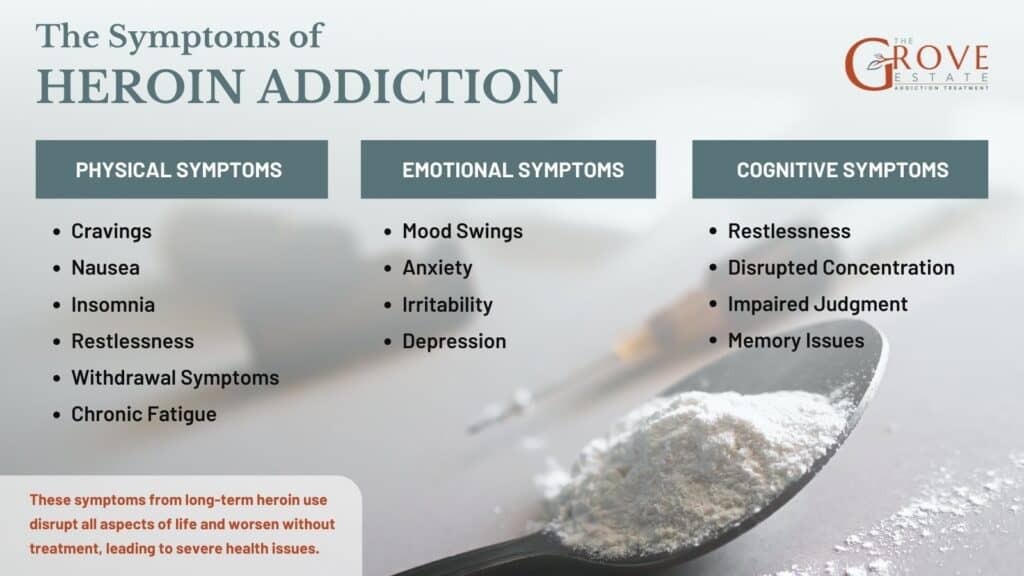
The symptoms of heroin addiction include:
Physical Symptoms:
- Cravings: Intense urges to use heroin, often uncontrollable.
- Nausea: Frequent feelings of sickness, especially during withdrawal.
- Insomnia: Difficulty sleeping or staying asleep.
- Restlessness: Constant agitation or inability to relax.
- Withdrawal Symptoms: These include muscle aches, diarrhea, vomiting, cold flashes, and severe discomfort when attempting to stop or reduce heroin use.
- Chronic Fatigue: Persistent tiredness, even without exertion.
Emotional Symptoms:
- Mood Swings: Rapid and extreme shifts in emotions, often related to drug use cycles.
- Anxiety: Overwhelming feelings of worry and nervousness, often tied to cravings or withdrawal.
- Irritability: Frequent frustration or anger, particularly when unable to use heroin.
- Depression: Low mood or loss of interest in daily activities, especially during withdrawal phases.
Cognitive Symptoms:
- Restlessness: Inability to focus or relax mentally, causing difficulty with concentration.
- Disrupted Concentration: Struggles with memory, attention, and decision-making.
- Impaired Judgment: Increased likelihood of risky behaviors and poor decision-making, due to the brain’s altered function.
- Memory Issues: Difficulty recalling recent events or maintaining focus on tasks.
These symptoms, which affect both the body and mind, manifest as a result of long-term heroin use and disrupt every aspect of a person’s life. Without treatment, these symptoms often worsen, leading to severe health consequences.
What Are the Causes of Heroin Addiction?
The primary causes of heroin addiction include certain biological, psychological, and lifestyle stressors that contribute to the cycle of dependency. According to “Heroin Statistics” published by the National Center for Drug Abuse Statistics, Since 2010, the number of Americans who die from overdosing on heroin has more than quadrupled. Now more than 14 thousand Americans die annually from overdosing on heroin.
The causes of heroin addiction include:
- Opioid Use and Tolerance: Repeated heroin use causes the brain to adapt to the drug’s effects by developing tolerance, which means individuals need increasing amounts of heroin to achieve the same euphoric feelings. This cycle of increased use often leads to physical dependence on heroin.
- Psychological Dependency: Users develop a psychological dependence on heroin, relying on it to cope with emotional or mental health issues. Feelings of euphoria temporarily mask underlying psychological pain, leading individuals to depend on heroin as a way to escape from reality.
- Genetic Predisposition: Some individuals are genetically predisposed to addiction, meaning they are more likely to develop a dependency on heroin due to inherited traits. A family history of addiction significantly increases the risk of opioid dependency. According to Kendler et. al. 2003, published by the American Journal of Psychiatry, genetic contribution to vulnerability to develop heroin addiction is 40–60%, suggesting a complex inheritance mode in which multiple genes exert a small effect, along with the environment
- Trauma and Psychological Factors: Many people who develop heroin addiction have experienced trauma or adverse life events, such as abuse, neglect, or loss. These experiences often trigger emotional pain, leading individuals to turn to heroin as a way to numb or escape their feelings.
- Social Factors and Lifestyle Stress: Environmental factors, such as living in a high-stress environment or having limited social support, pushes individuals toward heroin use. Lifestyle stress, including poverty, unemployment, or chronic stress, make people more vulnerable to substance use as a coping mechanism.
These factors interact to stimulate the brain’s reward system, cause dependency, and ultimately lead to a destructive cycle of heroin addiction. Without intervention, addiction deepens, causing more harm to an individual’s physical and mental well-being.
Contact us today to schedule an initial assessment or to learn more about our services. Whether you are seeking intensive outpatient care or simply need guidance on your mental health journey, we are here to help.
What are the Effects of Heroin Addiction on Health?
The effect of heroin on both physical and mental health, impacts nearly every system in the body. According to Substance Abuse and Mental Health Administration (SAMHSA), regular heroin use quickly leads to physical dependence, where the body becomes reliant on the drug to function. Withdrawal symptoms like nausea, muscle cramps, and anxiety appear within hours of the last dose, making it difficult to quit without medical support. The consequences of heroin use is felt immediately, but over time, the long-term damage becomes more severe and life-threatening.
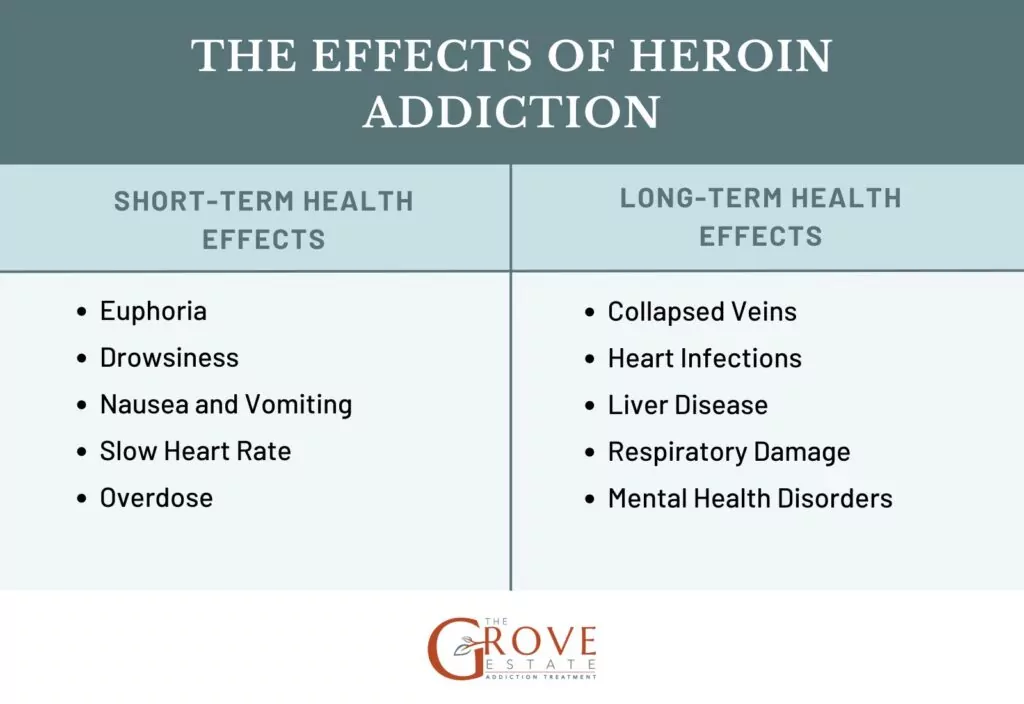
Short-Term Health Effects of Heroin Addiction
In the short term, heroin use rapidly affects the central nervous system, causing users to experience both pleasurable and harmful effects.
- Euphoria: Shortly after using heroin, individuals typically experience an intense feeling of euphoria or “rush” as the drug stimulates opioid receptors in the brain.
- Drowsiness: Following this rush, users often feel extremely drowsy, entering a semi-conscious state known as “nodding.”
- Respiratory Depression: Heroin severely slows breathing, which leads to respiratory depression, one of the major risk factors for overdose and death.
- Nausea and Vomiting: Many users suffer from nausea and vomiting shortly after taking heroin, as it disrupts normal bodily functions.
- Slow Heart Rate: Heroin use causes the heart rate to slow significantly, increasing the risk of dangerous cardiovascular events.
- Overdose: The risk of overdose is high with heroin, especially when combined with other depressants like alcohol, often resulting in death if not treated immediately.
Long-Term Health Effects of Heroin Addiction
The long-term effects of chronic heroin use are severe, often resulting in irreversible damage to both physical health and mental well-being.
- Collapsed Veins: Intravenous heroin use often leads to collapsed veins, infections, and abscesses due to repeated needle use.
- Heart Infections: Users are at high risk for heart infections such as endocarditis, particularly when injecting heroin, as bacteria enters the bloodstream.
- Liver Disease: Heroin use often leads to liver disease, including hepatitis or cirrhosis, particularly for users who share needles and contract bloodborne infections like hepatitis C.
- Respiratory Damage: Long-term use significantly affects the respiratory system, causing chronic respiratory damage and increasing susceptibility to pneumonia and tuberculosis.
- Mental Health Disorders: Prolonged heroin addiction leads to the deterioration of mental health, triggering or worsening conditions like depression, anxiety, and paranoia. Over time, cognitive function is severely impaired, leading to memory loss and difficulty with decision-making.
Heroin addiction’s short-term euphoric effects often blind users to the immediate risks, but over time, the long-term consequences, including collapsed veins, respiratory damage, and mental health disorders, result in devastating consequences for both physical and psychological health.
Are you covered for treatment?
The Grove Estate is an approved provider for Blue Cross Blue Shield and Cigna, while also accepting many other major insurance carriers.
Check Coverage Now!What is the Treatment for Heroin Addiction?
The treatment for heroin addiction involves a comprehensive approach aimed at helping individuals detoxify their bodies, manage withdrawal symptoms, and receive ongoing support through medication and therapy. According to “Heroin Overdose Data” published by Centers for Disease Control and Prevention, in 2020, heroin-involved overdose deaths decreased to 13,165, a 7% decrease from 2019. The rate of heroin-involved overdose deaths was 4.1 per 100,000 population in 2020. This shows the need for effective treatment which includes a combination of detoxification, medication-assisted therapy, withdrawal management, and long-term rehabilitation programs.
- Detoxification: The first step in treating heroin addiction is detoxification, where the body eliminates heroin and other toxins. This process often causes severe withdrawal symptoms, which includes nausea, muscle pain, anxiety, and intense cravings. Medical supervision during detox is critical to ensure safety and comfort as the body eliminates the drug.
- Medication-Assisted Treatment (MAT): Medication-assisted treatment (MAT) is a proven approach that uses medications such as methadone and buprenorphine to reduce cravings and withdrawal symptoms. These medications treat heroin addiction by stabilizing brain chemistry, preventing the intense highs and lows associated with heroin use, and reducing the risk of relapse. Methadone is a long-acting opioid agonist that helps reduce cravings without producing a high, while buprenorphine works as a partial agonist, offering similar effects with a lower risk of misuse.
- Withdrawal Management: Withdrawal from heroin is often accompanied by severe physical and psychological discomfort, including anxiety, insomnia, and nausea. Effective withdrawal management involves medical support to reduce these symptoms, making the detox process more tolerable. MAT and other medications are often used to help patients cope with the intensity of withdrawal.
- Rehabilitation and Behavioral Therapy: Once detoxification is complete, ongoing rehabilitation is essential. Rehabilitation programs offer a structured environment where individuals can receive behavioral therapy, which is critical for addressing the psychological aspects of addiction. Cognitive Behavioral Therapy (CBT) and other counseling methods help patients develop healthy coping mechanisms, recognize triggers, and make long-term lifestyle changes to prevent relapse. These programs also offer support groups, vocational training, and family therapy to help individuals rebuild their lives.
- Aftercare: Aftercare for heroin addiction is important for maintaining long-term sobriety and preventing relapse. It typically includes ongoing therapy, support groups, and regular medical check-ins to monitor progress. Aftercare also focuses on helping individuals rebuild their lives by addressing social, emotional, and vocational challenges. Support systems, like 12-step programs or sober living environments, provide additional structure and accountability as individuals transition back into everyday life, reinforcing the tools and coping strategies learned during treatment.
Overall, a combination of detoxification, medication-assisted treatment, and behavioral therapy provides the foundation for successful recovery from heroin addiction.
How to Prevent Heroin Addiction
To prevent heroin addiction, it is important to implement a combination of education, awareness, and proactive lifestyle choices. Education about the risks associated with heroin and opioid misuse should be a priority, helping individuals understand the dangers early on. Raising awareness about the addictive potential of both prescription opioids and illegal drugs like heroin encourages safer choices.
Other ways to prevent heroin addiction include:
- Prescription Management: Limiting access to opioids through careful prescription monitoring helps minimize the risk of addiction, especially for those with a history of substance use disorder.
- Opioid Alternatives: Encouraging the use of non-opioid pain relief options, such as physical therapy or over-the-counter medications, reduces the reliance on opioids and lowers the risk of addiction.
- Stress Management: Teaching stress management skills like mindfulness, meditation, or exercise can help individuals cope with life’s challenges without resorting to substance use as a coping mechanism.
- Mental Health Support: Offering access to mental health services allows individuals to address underlying emotional or psychological issues, reducing the risk of turning to drugs for relief.
According to the National Institute on Drug Abuse, heroin addiction has one of the highest relapse rates among substance use disorders. Studies show that between 70% and 90% of individuals who try to quit heroin will relapse without long-term support, showcasing the chronic nature of heroin addiction and how important it is to find the proper strategies to avoid triggers.
Self-Help Strategies:
- Stress Management: Practice techniques like mindfulness, meditation, or exercise to cope with life’s pressures.
- Build a Support Network: Surround yourself with family and friends who encourage healthy, drug-free choices.
- Avoid Risky Environments: Stay away from situations or people that encourage drug use.
- Stay Educated: Learn about the risks of opioid use and heroin addiction to make informed decisions.
Rediscover Life at The Grove Estate
Get the compassionate mental health support you deserve. We're here to help you reclaim joy, wellness, and a brighter future.
Our Facility
When to Seek Professional Help:
- Early Opioid Misuse: If you find yourself using opioids more frequently than prescribed or without medical necessity.
- Mental Health Struggles: When stress, depression, or anxiety leads to thoughts of using drugs to cope.
- Increased Cravings: If you begin to experience strong urges or cravings for opioids or heroin.
Share This Post

The Grove Editorial Team
All author posts
ADDICTION TREATMENTS IN INDIANA
Are you covered for treatment?







The Grove Estate is an approved provider for Blue Shield of California and Cigna, while also accepting many other major insurance carriers.
Check Coverage Now!