
Seconal Addiction: Effects, Risks, Symptoms, Causes & Treatment

Seconal is a barbiturate prescribed for its sedative and hypnotic properties, often used to treat insomnia or to induce anesthesia. Seconal addiction occurs when individuals misuse the drug, leading to physical and psychological dependence. This addiction is characterized by a compulsive need to consume Seconal despite harmful consequences. According to the National Institute on Drug Abuse (NIDA), barbiturates, including Seconal (secobarbital), are responsible for a significant portion of drug-related emergencies. In 2022, barbiturates accounted for approximately 2.1% of all drug overdose deaths in the United States.
Symptoms of Seconal addiction include drowsiness, confusion, dizziness, and impaired motor coordination. Over time, users will develop tolerance, requiring higher doses to achieve the same effects, which increases the risk of overdose.
Causes of Seconal addiction often stem from prolonged use, higher-than-prescribed dosages, or recreational use. Risk factors include a history of substance abuse, mental health disorders, and genetic predisposition.
Effects of Seconal addiction are severe and include respiratory depression, memory impairment, and even overdose and death. Long-term use will lead to significant cognitive decline and liver damage.
Treatment for Seconal addiction involves a combination of medical detoxification, inpatient or outpatient rehabilitation programs, behavioral therapies, and support groups like Narcotics Anonymous.
What is Seconal?
Seconal, known generically as secobarbital, is a barbiturate drug commonly prescribed to treat insomnia, anxiety, and to induce anesthesia before surgical procedures. Seconal was first synthesized in 1934 by Ernst Preiswerk and quickly became popular for its efficacy as a sedative.
Secobarbital is an extremely strong barbiturate that has also been used for euthanasia. According to an article titled “Efficacy and safety of drugs used for ‘assisted dying’” written by Worthington, A and published by the British Medical Bulletin, the most common lethal drugs used by clinicians to assist suicide were high doses of barbiturates, frequently either pentobarbital or secobarbital. Very high-dose barbiturates have long been a popular method for assisted suicide.
Seconal is classified as a Schedule II controlled substance in the United States, indicating it has a high potential for abuse, with use potentially leading to severe psychological or physical dependence. According to a study titled “Recent trends in barbiturate detection in medicolegal deaths” written by Stephenson. L., published by the National Library of Medicine, Barbiturates were found post mortem for suicides. They were obtained by online purchase from overseas sources in 9 cases (33%), and through veterinary practice in 2 cases (7%). Drug toxicity deaths where barbiturates were detected rose from 1 in 2000-2004 to 11 in 2015-2019, and those where deaths were primarily due to barbiturate toxicity rose from 1 in 2000-2004 to 9 in 2015-2019.
Did you know most health insurance plans cover substance use disorder treatment? Check your coverage online now.
What are the Medical Uses of Seconal?
Seconal is primarily used to treat severe insomnia and to calm patients before surgery. Its sedative properties make it effective in these roles, allowing patients to relax and sleep. In some cases, it is also used to treat epilepsy and as an anticonvulsant. However, due to the risks associated with its use, such as dependence and overdose, its medical applications are limited and closely monitored.
What Forms Does Seconal Come in?
Seconal is most commonly available in capsule form, typically in doses of 100 mg. These capsules are red, which has contributed to the street names “reds” and “red birds.” The drug will also be administered intravenously in a hospital setting for immediate sedative effects.
What are Other Names for Seconal?
Seconal is known by several other names, reflecting its various uses and forms. Commonly referred to as “reds” or “red birds” on the street, it is also known as “red devils.” In medical contexts, it is simply referred to by its generic name, secobarbital.
Contact us today to schedule an initial assessment or to learn more about our services. Whether you are seeking rehab treatment or simply need guidance on your recovery journey, we are here to help.
What is Secobarbital Addiction?
Secobarbital addiction refers to the compulsive need to use secobarbital despite harmful consequences. This addiction manifests through a pattern of behaviors that include craving the drug, continued use despite negative effects, and withdrawal symptoms when not using the drug. For example, a person addicted to secobarbital would find themselves unable to sleep without it, increasingly requiring higher doses to achieve the same effect, and experiencing intense anxiety or tremors when they try to stop.
How Does Secobarbital Lead to Addiction?
Secobarbital leads to addiction primarily through its impact on the central nervous system. The drug works by enhancing the effect of the neurotransmitter GABA, which slows down brain activity and produces a calming effect. With repeated use, the brain becomes reliant on the drug to maintain normal function. This dependency creates a cycle where the individual needs increasing amounts of secobarbital to achieve the same sedative effects, ultimately leading to addiction. According to the National Institute on Drug Abuse (NIDA), the risk of addiction increases with prolonged use, higher doses, and use without medical supervision.
How Common is Secobarbital Addiction?
Secobarbital addiction, while less common today due to decreased medical prescribing, still poses a significant risk. The overall prevalence of barbiturate abuse, including secobarbital, has declined with the rise of safer alternatives, but it remains a concern due to the drug’s potential for severe dependence and overdose.
Are you covered for treatment?
The Grove Estate is an approved provider for Blue Cross Blue Shield and Cigna, while also accepting many other major insurance carriers.
Check Coverage Now!What is Secobarbital Abuse vs. Addiction?
Secobarbital abuse refers to the misuse of the drug in a manner not prescribed by a healthcare professional, such as taking higher doses or using it for recreational purposes. Abuse leads to addiction, which is characterized by a compulsive need to use the drug and an inability to stop despite negative consequences. While abuse is a one-time or occasional event, addiction is a chronic condition that requires medical intervention and support for recovery.
What is Secobarbital Tolerance vs. Dependence?
Tolerance to secobarbital develops when an individual needs increasing doses of the drug to achieve the same effect. This occurs because the body adapts to the presence of the drug, diminishing its effectiveness over time. Dependence, on the other hand, is a physical condition where the body requires secobarbital to function normally. When dependent individuals stop taking the drug, they experience withdrawal symptoms, indicating that their body has become accustomed to its presence. Both tolerance and dependence are precursors to addiction, which involves psychological as well as physical reliance on the drug.
What is Secobarbital Addiction vs. Alcoholism?
Secobarbital addiction and alcoholism share similarities in that both involve dependence on a sedative substance that depresses the central nervous system. However, they differ in terms of the substances involved and the patterns of use. Secobarbital addiction specifically involves the misuse of a prescription barbiturate, while alcoholism pertains to the compulsive consumption of alcohol. Both conditions require specialized treatment approaches, but the legal, social, and health implications varies significantly between the two. Additionally, the withdrawal process for secobarbital will be more medically complex and requires careful monitoring due to the risk of severe symptoms such as seizures.
Rediscover Life at The Grove Estate
Get the compassionate mental health support you deserve. We're here to help you reclaim joy, wellness, and a brighter future.
Our Facility
What are the Signs and Symptoms of Seconal Addiction?
Seconal addiction manifests through various signs and symptoms. Recognizing these will help in early intervention and treatment. According to a study by Volkow. N. et al 2022 titled “Time To Start Talking about Pre-Addiction,” published by the National Institute on Drug Abuse (NIDA) found that patients receiving early intervention for substance use disorders experienced better health outcomes and greater improvements in their quality of life compared to those who did not receive timely care.
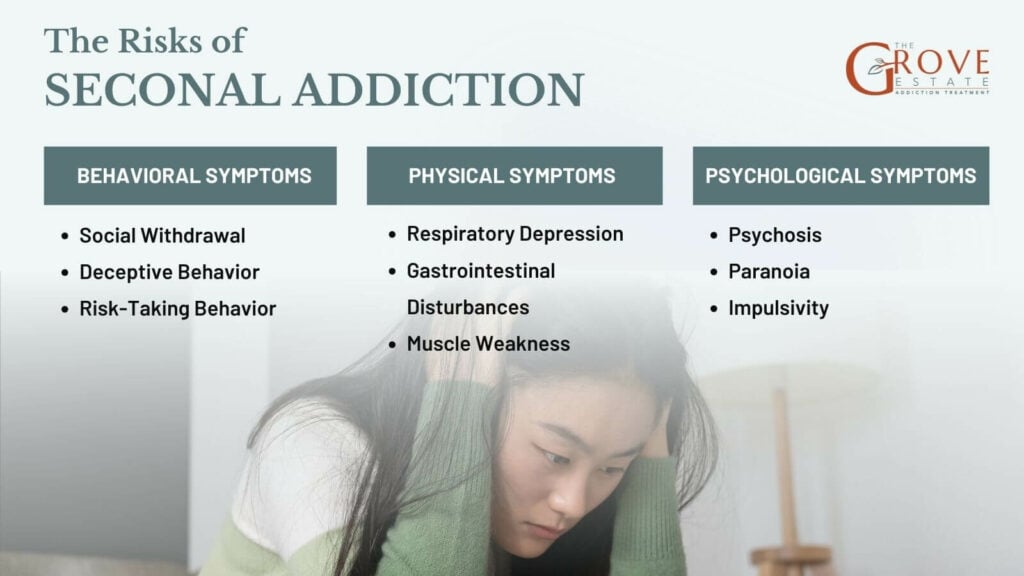
Here are the common signs and symptoms of Seconal addiction:
Behavioral Symptoms:
- Social Withdrawal: Avoiding social interactions and isolating oneself from friends, family, and activities.
- Deceptive Behavior: Lying or being secretive about Seconal use, including hiding the extent of use or financial expenditures related to the drug.
- Risk-Taking Behavior: Engaging in dangerous activities while under the influence of Seconal, such as driving or operating machinery.
Physical Symptoms:
- Respiratory Depression: Slowed or shallow breathing, which will be life-threatening, especially at higher doses.
- Gastrointestinal Disturbances: Digestive issues such as constipation or diarrhea, often related to the effects of Seconal on the gastrointestinal tract.
- Muscle Weakness: Reduced muscle strength and coordination due to the sedative effects of Seconal.
Did you know most health insurance plans cover substance use disorder treatment? Check your coverage online now.
Psychological Symptoms:
- Psychosis: Loss of touch with reality, experiencing hallucinations or delusions.
- Paranoia: Irrational suspicion or fear of others, feeling persecuted or threatened.
- Impulsivity: Acting without thinking of consequences, making rash decisions while under the influence of Seconal.
How to Identify Seconal Withdrawal Symptoms?
Identifying seconal withdrawal symptoms is important for managing and treating addiction effectively. According to a study titled “Seconal sodium- Secobarbital sodium capsule” published by DailyMed, abrupt cessation of Seconal after prolonged use results in serious withdrawal symptoms such as delirium, convulsions, and even death if not managed properly under medical supervision. The symptoms typically start within hours to a few days after the last dose and will persist for several days to weeks, depending on the level of dependence and individual health factors
Early Withdrawal Symptoms:
- Anxiety: Feeling restless, nervous, or on edge.
- Tremors: Shaking hands or body.
- Insomnia: Difficulty falling or staying asleep.
- Sweating: Excessive sweating even without physical exertion.
Progression and Intensity: As withdrawal progresses, symptoms will become more intense and include:
- Nausea and Vomiting: Persistent feelings of sickness and vomiting.
- Seizures: Severe cases lead to convulsions, which are life-threatening.
- Hallucinations: Seeing or hearing things that are not there.
- Delirium: Severe confusion and disorientation.
Typical Duration: The duration of secobarbital withdrawal symptoms will vary:
- Initial Phase: Symptoms begin within a few hours after the last dose and peak within 1-3 days.
- Protracted Withdrawal: Some symptoms, like anxiety and insomnia, persist for weeks or even months.
What are the Causes of Seconal Addiction?
The primary cause of Seconal addiction is prolonged or improper use, which will lead to physical and psychological dependence. This dependency often develops as the body builds a tolerance to the drug, requiring higher doses to achieve the same sedative effects. According to an article titled “Secobarbital” published by Medline Plus, secobarbital should normally be taken for short periods of time. If you take secobarbital for 2 weeks or longer, secobarbital will not help you sleep as well as it did when you first began to take the medication. If you take secobarbital for a long time, you will also develop dependence on it.
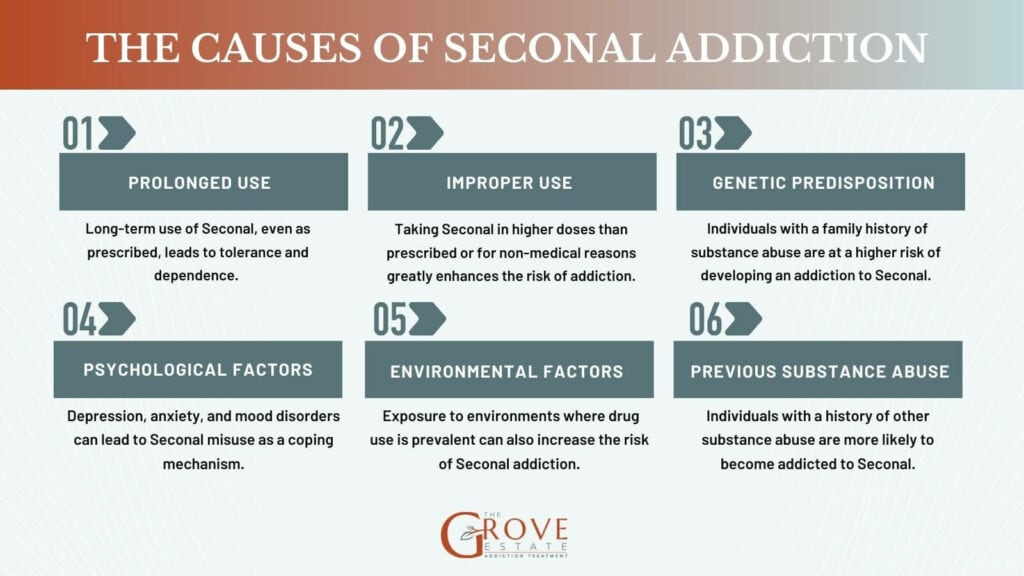
Key Causes of Seconal Addiction:
- Prolonged Use: Long-term use of Seconal, even as prescribed, leads to tolerance and dependence.
- Improper Use: Taking Seconal in higher doses than prescribed or for non-medical reasons greatly enhances the risk of addiction. This misuse stems from attempts to self-medicate for issues such as anxiety or insomnia.
- Genetic Predisposition: Individuals with a family history of substance abuse are at a higher risk of developing an addiction to Seconal. Genetic factors will influence how the body metabolizes drugs and how susceptible a person is to dependence. According to a study by the National Institute on Drug Abuse (NIDA), genetic factors account for approximately 40-60% of an individual’s vulnerability to addiction.
- Psychological Factors: Mental health disorders such as depression, anxiety, or other mood disorders lead to the misuse of Seconal as a coping mechanism. Individuals with untreated mental health issues are more likely to develop substance use disorders.
- Environmental Factors: Exposure to environments where drug use is prevalent also increases the risk of Seconal addiction. This includes social circles where drug use is normalized or situations involving high stress and trauma.
- Previous Substance Abuse: Individuals with a history of other substance abuse are more likely to become addicted to Seconal. Cross-tolerance between different drugs will accelerate the dependency process.
Contact us today to schedule an initial assessment or to learn more about our services. Whether you are seeking rehab treatment or simply need guidance on your recovery journey, we are here to help.
What Are the Risks of Seconal Addiction?
Seconal addiction poses significant risks to both physical and mental health, leading to severe consequences if not addressed promptly. According to a study titled “Secobarbital” published by Drugs.com, some people using secobarbital have engaged in activities such as driving, eating, walking, making phone calls, or having sex and later not having any memory of the activity. These short-term effects emphasize the immediate dangers associated with Seconal use and the potential for life-threatening complications.
How Does Seconal Addiction Affect the Body in the Short-term?
In the short term, Seconal addiction causes severe and immediate health issues. These short-term effects include:
- Respiratory Depression: Even therapeutic doses depress breathing, leading to potentially fatal respiratory failure.
- Cognitive Impairment: Users experience confusion, impaired judgment, and memory loss.
- Coordination Issues: Motor skills are significantly impaired, increasing the risk of accidents and injuries.
- Physical Dependence: Regular use results in physical dependence, making it difficult to stop without experiencing withdrawal symptoms.
- Overdose Risk: High doses of Seconal leads to coma or death, particularly when combined with other depressants like alcohol.
What are the Long-term effects of Seconal Addiction?
Long-term use of Seconal exacerbates health risks and leads to more severe consequences.
- Chronic Respiratory Issues: Prolonged use causes lasting damage to the respiratory system, leading to chronic obstructive pulmonary disease (COPD)
- Liver Damage: Extended use results in severe liver damage, including hepatitis and cirrhosis, due to the toxic effects of the drug on the liver.
- Cognitive Decline: Persistent use impairs brain function, causing long-term cognitive deficits and memory issues.
The impact on personal and professional life is also significant. Individuals will struggle with maintaining employment, relationships, and fulfilling daily responsibilities due to the pervasive effects of the drug.
Are you covered for treatment?
The Grove Estate is an approved provider for Blue Cross Blue Shield and Cigna, while also accepting many other major insurance carriers.
Check Coverage Now!What are the Stages of Seconal Addiction?
Seconal addiction progresses through several stages, each marked by distinct behaviors and symptoms. Understanding these stages helps in recognizing and addressing addiction early.
1. Experimentation
Experimentation is the initial stage where an individual tries Seconal out of curiosity or peer pressure. According to an article titled “Drug Addiction (Substance Use Disorder)” published by the Mayo Clinic in 2022, drug addiction starts with experimental use of a drug in social situations, and, for some people, the drug use becomes more frequent. For others, drug addiction begins when they take prescribed medicines or receive them from others who have prescriptions.
2. Regular Use
Regular use involves more consistent and frequent consumption of Seconal. At this stage, the individual starts to integrate Seconal into their routine. They might use the drug to cope with stress, anxiety, or to help with sleep. The frequency and dosage might increase, but the user still believes they are in control.
Rediscover Life at The Grove Estate
Get the compassionate mental health support you deserve. We're here to help you reclaim joy, wellness, and a brighter future.
Our Facility3. Dependence
Dependence occurs when the body adapts to Seconal, leading to tolerance and withdrawal symptoms. The individual now needs higher doses to achieve the same effect, indicating tolerance. Physical and psychological dependence develops, making it difficult to function normally without the drug. Withdrawal symptoms, such as anxiety, tremors, and insomnia, occur if the drug is not taken.
4. Addiction
Addiction is characterized by a compulsive need to use Seconal despite negative consequences. At this stage, the individual loses control over their drug use. They continue to use Seconal despite knowing the harm it causes to their health, relationships, and responsibilities. The addiction significantly impacts their daily life and well-being.
5. Recovery
Recovery involves the process of overcoming addiction and restoring health. Recovery requires medical and psychological interventions, including detoxification, therapy, and support groups. It is a long-term process that focuses on achieving and maintaining sobriety. Individuals learn coping mechanisms to handle triggers and prevent relapse.
Did you know most health insurance plans cover substance use disorder treatment? Check your coverage online now.
6. Relapse
Relapse is the return to drug use after a period of sobriety. Relapse occurs due to exposure to triggers, stress, or lack of support. It is a common part of the recovery journey and indicates the need for ongoing support and possibly adjustment in treatment plans. Relapse does not signify failure but highlights the chronic nature of addiction and the importance of sustained effort in recovery. According to the National Institute of Drug Abuse (NIDA), 40–60% of people with substance use disorders (SUDs) experience a relapse.
How Does Seconal Interact with Other Substances?
Secobarbital (Seconal) has dangerous interactions with various substances, including alcohol, opioids, and benzodiazepines. According to “Seconal Sodium Interactions” published by Drugs.com, Seconal interacts with over 600 other medications, which enhances its sedative effects or increases the risk of adverse reactions such as respiratory depression and hypotension.
How Does Seconal Interact with Alcohol?
Mixing Seconal with alcohol is extremely dangerous. Both substances are central nervous system depressants, meaning they significantly impair brain function and bodily functions. According to an article titled “Barbiturates” published by the Cleveland Clinic, alcohol and barbiturates interact and cause a much stronger effect. This causes severe drowsiness, passing out or trouble breathing. In severe cases, this could cause a person to have severe organ damage, or it could be deadly.
Contact us today to schedule an initial assessment or to learn more about our services. Whether you are seeking rehab treatment or simply need guidance on your recovery journey, we are here to help.
How Does Seconal Interact with Opioids?
The combination of Seconal and opioids will be life-threatening. Both drugs depress the central nervous system, which will lead to extreme sedation, respiratory failure, and death. According to an article titled “Barbiturate Abuse” Dr d’Orban states that some addicts add barbiturates to their abuse of other drugs upon which they depend.
How Does Seconal Interact with Benzos?
Combining Seconal with benzodiazepines amplifies the sedative effects, leading to a high risk of severe respiratory depression, unconsciousness, and death. This combination is particularly dangerous because both drugs enhance the inhibitory neurotransmitter GABA in the brain. According to ScienceDirect, the co-use of short-acting barbiturates and benzodiazepines is associated with a higher incidence of severe adverse effects.
What are the Types of Treatment for Seconal Addiction?
Treatment for Seconal addiction involves various approaches to address both the physical and psychological aspects of addiction, these include detox, rehab, therapy and holistic approaches. Combining the different modalities is helpful when dealing with the complexity of Seconal addiction.
Are you covered for treatment?
The Grove Estate is an approved provider for Blue Cross Blue Shield and Cigna, while also accepting many other major insurance carriers.
Check Coverage Now!Medical Detox
Medical detox involves clearing Seconal from the body under medical supervision. This process ensures safety during withdrawal, which includes severe symptoms like seizures. The advantage is that it provides a controlled environment for managing withdrawal. The disadvantage is that detox alone does not address the psychological aspects of addiction. It is typically the first step in a comprehensive treatment plan.
Medication-Assisted Treatment (MAT) for Seconal Addiction
While Medication-Assisted Treatment (MAT) is more commonly associated with opioid and alcohol addiction, certain medications will help manage withdrawal symptoms and reduce cravings associated with barbiturate addiction like Seconal. Here are some medications used in MAT for Seconal addiction:
- Phenobarbital: Used to gradually taper off barbiturates and reduce withdrawal symptoms.
- Benzodiazepines: Sometimes used to manage anxiety and agitation during detox.
- Anti-seizure Medications: Prescribed to prevent seizures during withdrawal.
Inpatient Rehab
Inpatient rehab requires staying at a treatment facility 24/7, providing intensive therapy and support. This structured environment minimizes exposure to triggers and offers constant care. The advantage is the comprehensive support provided, but it will be costly and requires time away from daily responsibilities. It is best for severe addiction cases or those with multiple relapses.
Partial Hospitalization Program (PHP)
PHP offers intensive treatment during the day while allowing patients to return home at night. It provides a balance between inpatient care and the flexibility of outpatient treatment. The advantage is significant support without overnight stays, though it lacks the 24-hour supervision of inpatient rehab. It is suitable for those needing substantial support with a stable home environment.
Rediscover Life at The Grove Estate
Get the compassionate mental health support you deserve. We're here to help you reclaim joy, wellness, and a brighter future.
Our FacilityOutpatient Rehab
Outpatient rehab involves regular therapy sessions while living at home. It offers flexibility to maintain daily responsibilities and is less expensive than inpatient care. The disadvantage is the potential exposure to triggers and less intensive support. It is ideal for those with less severe addiction or as a follow-up after inpatient drug rehab cost.
Intensive Outpatient Program (IOP)
OP offers a more intensive level of outpatient care with multiple sessions per week for several hours each. It provides substantial support while allowing patients to live at home. The disadvantage is the significant time commitment. IOP is best for those needing more support than standard outpatient treatment but less than inpatient care.
Telehealth
Telehealth provides addiction treatment services via digital platforms, including video conferencing and online therapy. The main advantage is convenience and accessibility, especially for those in remote areas. The lack of physical presence will be a disadvantage. Telehealth is suitable for individuals unable to attend in-person sessions due to geographic or time constraints.
Did you know most health insurance plans cover substance use disorder treatment? Check your coverage online now.
Therapy
Therapy includes various psychological treatments, such as cognitive-behavioral therapy (CBT), to address the mental aspects of addiction. The advantage is that it helps tackle underlying issues contributing to addiction, though progress takes time. Therapy is essential at all 6 Stages of Addiction treatment, offering tools for long-term recovery.
Holistic Treatments
Holistic treatments incorporate alternative therapies like yoga, meditation, and acupuncture alongside conventional treatments. These approaches provide a comprehensive approach to health and well-being. The advantage is holistic care, but scientific evidence supporting these methods are limited. They are used as complementary therapies to enhance overall treatment effectiveness.
Aftercare
Aftercare provides ongoing support post-treatment to prevent relapse. The advantage is sustained support and monitoring, though it requires a long-term commitment. Aftercare is crucial for maintaining sobriety and providing support as patients transition back into everyday life.
Contact us today to schedule an initial assessment or to learn more about our services. Whether you are seeking rehab treatment or simply need guidance on your recovery journey, we are here to help.
What are Effective Strategies for Seconal Addiction Recovery?
Effective strategies for Seconal addiction recovery encompass various treatment options, support mechanisms, and preventive measures. In addition to the traditional treatment methods, lifestyle changes will drastically help with addictive behaviors.

- Create a structured daily routine: Helps maintain focus and avoid idle time.
- Avoid triggers: Identify and stay away from people, places, and activities that encourage drug use.
- Engage in regular physical activity: Exercise promotes physical health and reduces stress.
- Practice mindfulness: Techniques like meditation will improve mental clarity and reduce cravings.
- Continue therapy: Ongoing counseling addresses underlying issues and reinforces coping strategies.
- Build a strong support network: Surround yourself with supportive friends and family.
- Have a relapse prevention plan: Prepare strategies to handle potential relapse situations.
How to Support Someone with a Seconal Addiction?
Supporting someone with a Seconal addiction involves recognizing the signs of addiction, approaching conversations with empathy and care, and utilizing available resources to provide the necessary support.
- Recognizing the Need for Help: Look for signs like changes in behavior, neglecting responsibilities, and physical symptoms of addiction. Acknowledging the problem early leads to timely intervention.
- Approaches for Conversations About Addiction: Approach with empathy and without judgment. Use “I” statements to express concerns and avoid blaming. Encourage them to seek professional help and offer support in finding resources.
- Resources for Friends and Family: Utilize resources like Al-Anon, Nar-Anon, and local support groups for families affected by addiction. These organizations provide education, support, and coping strategies to help loved ones navigate the challenges of supporting someone with an addiction.
Can I take Seconal if I’m Pregnant?
No, Seconal should not be taken during pregnancy. The drug crosses the placenta and harms the developing fetus, leading to congenital abnormalities and withdrawal symptoms in the newborn. The FDA classifies Seconal as a Category D drug, indicating there is positive evidence of human fetal risk. Pregnant women should consult their healthcare provider for safer alternatives.
Are you covered for treatment?
The Grove Estate is an approved provider for Blue Cross Blue Shield and Cigna, while also accepting many other major insurance carriers.
Check Coverage Now!How Long Does Seconal Stay in Your System?
Seconal, or secobarbital, does stay in your system for up to 7 days, depending on factors like dosage, frequency of use, and individual metabolism. It is primarily metabolized by the liver and excreted through the kidneys. Urine tests do typically detect the presence of Seconal for up to a week after the last dose.
Is Seconal Addictive Even if Taken as Prescribed?
Yes, Seconal is addictive even when taken as prescribed. Long-term use will lead to tolerance, where higher doses are needed to achieve the same effect, and physical dependence, where the body requires the drug to function normally. Withdrawal symptoms will occur if use is reduced or stopped suddenly.
How Does Seconal Addiction Impact Personal Relationships?
Seconal addiction has profound effects on personal relationships, often leading to significant strain and conflict. According to the National Institute on Drug Abuse, addiction behaviors such as secrecy, dishonesty, and neglect of responsibilities cause mistrust and resentment among family members and friends. The erratic behavior and mood swings associated with Seconal addiction further exacerbate these issues, similar to the relational challenges seen in Serax addiction.
Over time, Seconal addiction isolates individuals from their loved ones, creating a cycle of loneliness and further drug dependence. Relationships often deteriorate as the addicted individual prioritizes drug use over social and familial bonds. Seeking help through individual counseling can be crucial in addressing these issues, helping individuals rebuild trust and improve their relationships by learning healthy communication and coping strategies.
Share This Post

The Grove Editorial Team
All author posts
ADDICTION TREATMENTS IN INDIANA
Are you covered for treatment?







The Grove Estate is an approved provider for Blue Shield of California and Cigna, while also accepting many other major insurance carriers.
Check Coverage Now!