
How Long Does Trazodone Stay in the System?

You or a loved one is taking trazodone and wondering how long it stays in the system; we are here to help. It’s a common question, especially when preparing for a drug test or managing medications safely. On average, trazodone is detected in the body for 1 to 3 days, though this depends on factors like your metabolism, dosage, and the type of test. About 3.2% of Hoosiers aged 12 and older reported misusing prescription pain relievers or sedatives in the past year—a category that includes medications like trazodone, especially when used outside prescribed guidelines or for non-medical purposes.
Detection times vary depending on the testing method used, such as urine, blood, saliva, or hair, as well as individual health factors. These timelines play an important role in drug screenings, managing medication schedules, and ensuring safe treatment planning.
Knowing how long trazodone stays in your system helps you make informed, confident decisions about your health and recovery journey.
What Is Trazodone?
Trazodone is a prescription medication used to treat major depressive disorder. It belongs to a class of drugs known as serotonin modulators, which help to balance serotonin levels in the brain. Trazodone is FDA-approved for depression but is also commonly prescribed off-label for conditions like insomnia and anxiety due to its sedative effects. It is most widely available in oral tablet form, including immediate-release and extended-release options. Some of the common brand names for trazodone include Desyrel and Oleptro.
Did you know most health insurance plans cover substance use disorder treatment? Check your coverage online now.
How Long Does Trazodone Stay in Your System After Quitting?
Trazodone stays in your system for 1 to 3 days, depending on detection methods like urine, blood, hair, and saliva testing. However, the exact timeframe varies based on individual factors such as metabolism, age, liver function, dosage, and how long you’ve been taking the medication. While the body eliminates most of the drug within a few days, traces linger longer depending on the test used. For example, urine tests detect trazodone slightly longer than blood or saliva tests, while hair tests potentially show evidence of use for weeks to months. Understanding how long trazodone remains in your system after quitting is important for those navigating drug screenings, treatment planning, or simply seeking peace of mind during recovery.
How is Trazodone Processed In the Body?
Trazodone is processed in the body through the liver, where it undergoes metabolization by the enzyme CYP3A4. After being absorbed in the gastrointestinal tract, trazodone enters the bloodstream and exerts its effects by influencing serotonin activity in the brain. It is broken down in the liver into active and inactive metabolites, including m-chlorophenylpiperazine (mCPP), which contributes to some of its effects and side effects. These metabolites are then eliminated from the body, mainly through the urine. The efficiency of this process varies based on factors like liver function, age, overall health, and dosage, all of which influence how long trazodone stays in the system and how it affects the individual.
What Tests are Done to Detect Trazodone In the Body in Indiana?
The tests are done to detect trazodone in the body in Indiana, including urine, blood, hair, and saliva. They use several standard drug testing methods, each with its own detection window and accuracy. These tests are used for medical monitoring, legal purposes, or workplace screenings. The amount of time trazodone remains detectable depends on factors like dosage, metabolism, and how long the medication has been used.
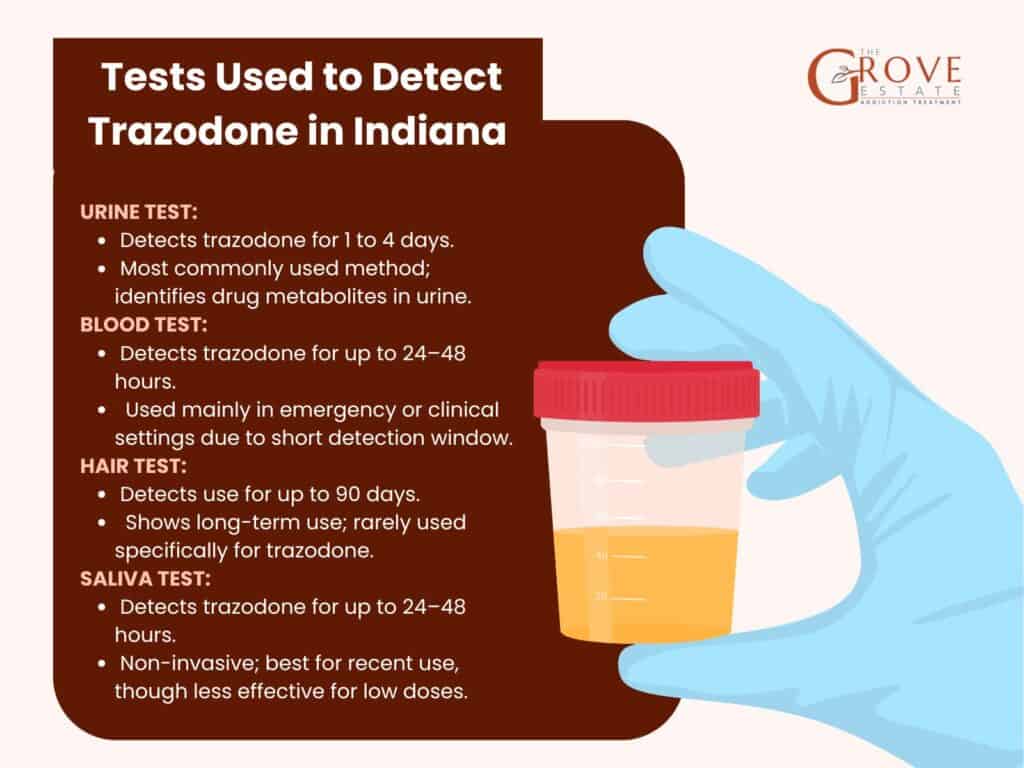
The most common tests used to detect trazodone in Indiana include:
- Urine Testing: Detection window is about 1 to 4 days. Urine tests are the most widely used method for detecting trazodone. The drug and its metabolites are excreted through urine and detected for up to 96 hours after the last dose.
- Blood Testing: Detection window is up to 24 to 48 hours. Trazodone enters the bloodstream quickly but also clears relatively fast. Blood tests are more commonly used in emergency or clinical settings rather than routine drug screenings.
- Hair Testing: Detection window is up to 90 days. Hair follicle testing shows long-term drug use. Though not commonly used for trazodone, it detects drug exposure weeks or even months after the last use, depending on hair growth.
- Saliva Testing: Detection Window is up to 24 to 48 hours. Saliva tests are non-invasive and effective for recent drug use, but less sensitive for detecting lower doses of trazodone.
Contact us today to schedule an initial assessment or to learn more about our services. Whether you are seeking rehab treatment or simply need guidance on your recovery journey, we are here to help.
What Are the Factors That Influence Trazodone Detection Time?
The factors that influence trazodone detection time are dosage, frequency of use, metabolism, age, liver function, and overall health status. These variables impact how quickly the body processes and eliminates the drug, which in turn affects how long it remains detectable in different types of drug tests.
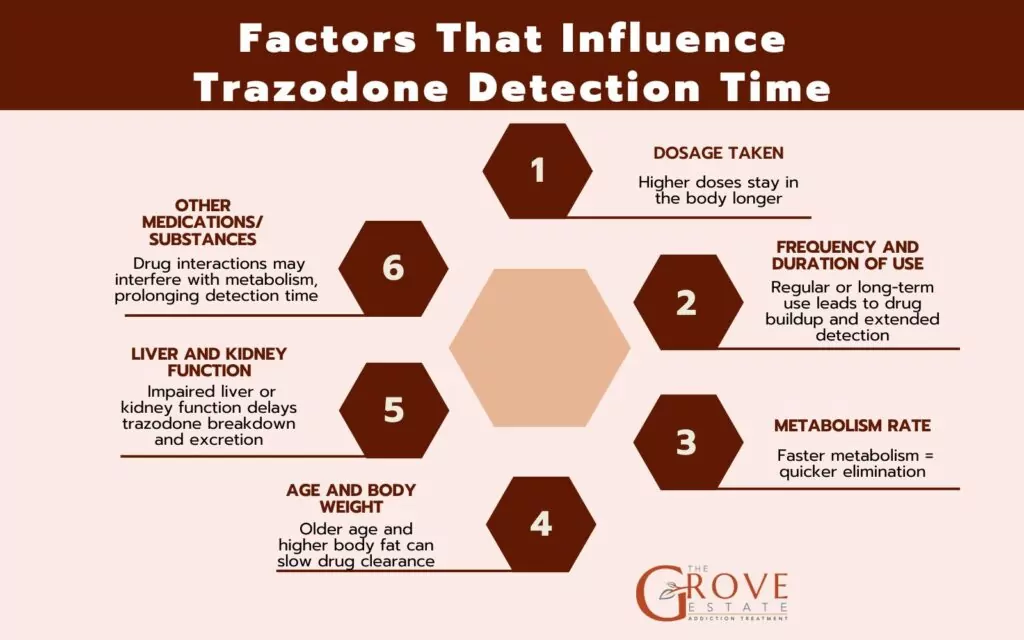
Below are key factors that play a role in how long trazodone stays in your system:
- Dosage Taken: Higher doses of trazodone take longer for the body to break down and eliminate, extending the detection window.
- Frequency and Duration of Use: Long-term or frequent use leads to trazodone building up in the system, making it detectable for a longer period compared to one-time or occasional use.
- Metabolism Rate: People with faster metabolisms process and clear medications more quickly, shortening detection time.
- Age and Body Weight: Older adults or individuals with higher body fat percentages eliminate trazodone more slowly due to changes in metabolic function and fat storage.
- Liver and Kidney Function: Since trazodone is metabolized in the liver and excreted through the urine, impaired liver or kidney function slows down clearance from the body.
- Other Medications or Substances: Some drugs interact with trazodone or compete for the same metabolic pathways, potentially delaying its elimination.
What Is the Half-life of Trazodone?
The half-life of a drug is the time it takes for half of it to be cleared from the bloodstream. Trazodone’s half-life ranges from 5 to 13 hours, depending on factors like metabolism, age, and liver function. This short half-life means trazodone exits the bloodstream within 1 to 2 days, making blood and saliva tests useful only for recent use. However, its metabolites remain detectable in urine for up to 4 days and in hair for up to 90 days, allowing for longer detection through those methods. Understanding half-life is key to interpreting test results and planning safe medication use.
Are There Withdrawal Symptoms with Trazodone?
Yes, there are withdrawal symptoms with trazodone, especially if the medication is stopped suddenly after long-term use. Common symptoms include irritability, anxiety, insomnia, dizziness, fatigue, and flu-like symptoms.
Timeline:
- Within 1–3 days, Mild symptoms like sleep disturbances and mood changes begin.
- By days 4–7: Symptoms peak, including increased anxiety, nausea, and irritability.
- 1–2 weeks: Most symptoms start to ease, though some people experience lingering effects for a few more weeks, depending on dosage and duration of use.
Tapering off trazodone under medical supervision is recommended to minimize withdrawal effects.
Are you covered for treatment?
The Grove Estate is an approved provider for Blue Cross Blue Shield and Cigna, while also accepting many other major insurance carriers.
Check Coverage Now!How to Get Treatment for Trazodone in Indiana?
To get treatment for trazodone misuse in Indiana, you must begin by exploring a variety of professional services focused on safe recovery and long-term support. Treatment approaches range from medical detox to residential care and dual diagnosis treatment, each designed to meet the specific needs of the individual.

Here are the trazodone treatment options in Indiana:
- Detox: Detox is the first important step in treating trazodone misuse. It involves medical supervision as the drug is cleared from the body, helping to manage withdrawal symptoms safely and comfortably. Detox prepares individuals for the next phase of treatment by stabilizing both physical and mental health.
- Residential Treatment: Residential treatment offers round-the-clock care in a structured, supportive setting. Residential rehab includes individual and group therapy, medication management, and relapse prevention planning. This immersive approach is ideal for individuals with long-term or severe trazodone misuse who need a focused environment for healing.
- Dual Diagnosis Treatment: Many individuals struggling with trazodone misuse also face co-occurring mental health disorders such as depression or anxiety. Dual diagnosis treatment addresses both conditions simultaneously through integrated care, improving long-term outcomes and emotional stability. For those in Indiana seeking this level of care, The Grove offers specialized Dual diagnosis treatment tailored to individuals dealing with the complex challenges of trazodone misuse and mental health disorders.
- Aftercare: Aftercare planning ensures ongoing support following formal treatment. Services include outpatient therapy, support groups, sober living arrangements, and continued psychiatric care, all aimed at preventing relapse and promoting sustained recovery.
- Rehab for Professionals: Professionals in high-stress careers require confidential, specialized treatment that accommodates their unique needs. Rehab programs for professionals in Indiana offer targeted therapy, stress management, and flexible scheduling to support recovery without compromising career responsibilities.
Does Trazodone Show Up on a Drug Test?
Yes, trazodone does show up on a drug test, but it depends on the type of test being used. Standard drug panels (like a 5-panel test) do not screen for trazodone, as it is not a controlled substance. However, more comprehensive tests or prescription drug panels detect it, especially if there is a specific reason to look for it. Additionally, trazodone causes false positives for other substances like amphetamines or MDMA in some immunoassay screenings.
How Does Trazodone Compare to Vicodin In Terms of Detection Times?
Trazodone, compared to Vicodin, differs significantly in detection times due to their chemical makeup and classification.
- Trazodone is detectable in urine for 1–4 days, depending on use and test type.
- Vicodin (hydrocodone), an opioid, is detected in urine for 2–4 days, though it shows up longer with heavy use.
Vicodin stays in the system slightly longer than trazodone, especially in blood and urine tests. Hair tests for both show traces for up to 90 days.
Rediscover Life at The Grove Estate
Get the compassionate mental health support you deserve. We're here to help you reclaim joy, wellness, and a brighter future.
Our Facility
Can Trazodone be Detected After a Week?
Yes, trazodone can be detected after a week, but only in certain types of tests. While urine, blood, and saliva tests usually no longer detect trazodone after 3 to 4 days, hair tests show its presence for up to 90 days. So, detection after a week is possible, but only through hair follicle testing.
What Is the Elimination Process For Trazodone?
The elimination process of trazodone follows a defined elimination process through the body. After ingestion, trazodone is metabolized in the liver by enzymes (CYP3A4) into active and inactive compounds. These are then excreted mostly through urine, with a small amount eliminated via feces. The body clears most of the drug within 1 to 3 days, depending on metabolism, liver function, and dosage.
Is Trazodone Addictive?
Yes, trazodone is addictive and habit-forming, though it is not considered as highly addictive as opioids or benzodiazepines. While it’s prescribed as a safer alternative for sleep or depression, misuse or long-term use leads to psychological dependence or withdrawal symptoms if stopped abruptly. Proper medical guidance helps reduce this risk.
Share This Post

The Grove Editorial Team
All author posts
ADDICTION TREATMENTS IN INDIANA
Are you covered for treatment?








The Grove Estate is an approved provider for Blue Shield of California and Cigna, while also accepting many other major insurance carriers.
Check Coverage Now!