
Does Adderall Help With Anxiety?

No, Adderall does not help with anxiety. While it is a well-known prescription medication effective for managing ADHD symptoms like inattention and hyperactivity, it is not designed to treat anxiety and can actually make it worse.
As a stimulant, Adderall increases nervousness, heart rate, and restlessness, all of which intensify anxiety symptoms. Many people in Indiana and beyond mistakenly believe it helps with stress or anxiety, leading to widespread misuse. It should only be taken under a healthcare provider’s supervision and strictly for its approved uses.
What Is Adderall and What Is It Used For?
Adderall is a prescription medication that stimulates the central nervous system, helping people feel more alert, focused, and in control of their behavior. It’s most commonly used to manage ADHD symptoms like inattention, hyperactivity, and impulsivity in both children and adults. Adderall comes in two forms: Adderall IR (immediate-release) and Adderall XR (extended-release), each with different durations of action tailored to individual needs. It’s also prescribed in some cases to treat narcolepsy, a sleep disorder that causes sudden daytime drowsiness, though only the short-acting version is approved for this use.
Did you know most health insurance plans cover substance use disorder treatment? Check your coverage online now.
Can Adderall Help With Anxiety?
No, Adderall does not help with anxiety and makes it worse. Although Adderall improves focus and attention in people with ADHD, it is a stimulant that increases nervousness, heart rate, and restlessness, all of which intensify anxiety symptoms. The Indiana College Substance Use Survey (spring 2021) surveyed 8,059 students aged 18–25 across 23 Indiana colleges, and tracks stimulant use alongside alcohol, vaping and other substances. It’s not approved to treat anxiety and is avoided in people who struggle primarily with anxiety disorders. In some cases, where a person has both ADHD and anxiety, Adderall indirectly helps by improving focus, but this requires close medical supervision.
What are the Side Effects of Adderall Use for Anxiety?
The side effects of Adderall use for anxiety include both common and severe reactions, especially in individuals who take it without a prescription or already struggle with anxiety. Since Adderall is a stimulant, it worsens rather than relieves anxious symptoms, and improper use leads to serious health risks.
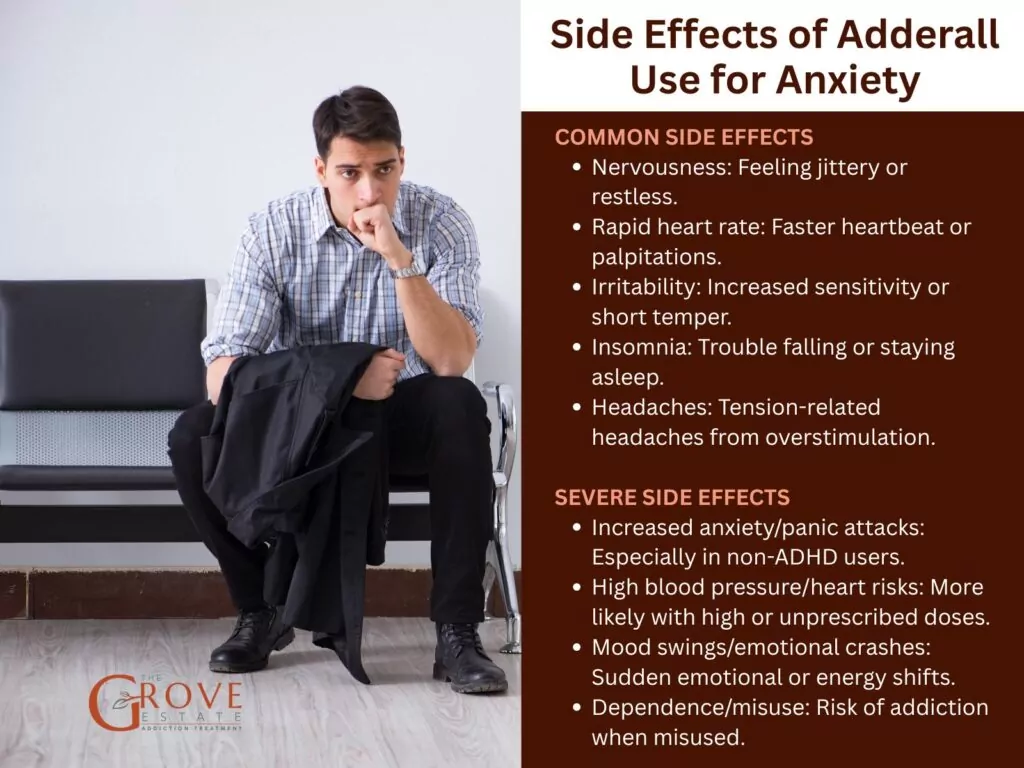
Common Side Effects:
- Nervousness: increased jitteriness or restlessness.
- Rapid heart rate: faster heartbeat, sometimes with palpitations.
- Irritability: heightened sensitivity or quick temper.
- Insomnia: difficulty falling or staying asleep.
- Headaches: tension or pressure headaches from overstimulation.
Severe Side Effects:
- Increased anxiety or panic attacks: especially in people without ADHD.
- High blood pressure and heart risks: more likely with high or unprescribed doses.
- Mood swings or emotional crashes: sharp changes in mood and energy.
- Dependence or misuse: risk of addiction when not used as prescribed.
Are There Any Withdrawal Symptoms of Adderall Use for Anxiety?
Yes, there are withdrawal symptoms of Adderall use for anxiety, especially if the medication is stopped suddenly or used improperly. Adderall alters brain chemicals related to focus and mood, so stopping it causes a “crash” effect. People experience symptoms such as depression, fatigue, agitation, trouble concentrating, and mood swings. These symptoms are more intense if Adderall is used at high doses or without a prescription.
To avoid severe withdrawal effects, tapering the dose slowly under medical supervision is strongly advised. A healthcare provider helps manage the process safely and supports emotional or psychological needs during withdrawal. For people who have been misusing the drug, that taper is managed inside Adderall addiction rehab.
Contact us today to schedule an initial assessment or to learn more about our services. Whether you are seeking rehab treatment or simply need guidance on your recovery journey, we are here to help.
What are the Alternatives to Adderall for Anxiety?
The alternatives to Adderall for anxiety include non-stimulant medications, therapy, and lifestyle-based strategies that are safer and more effective for managing anxiety symptoms. Unlike Adderall, these options are specifically designed to treat anxiety without increasing restlessness or nervousness.
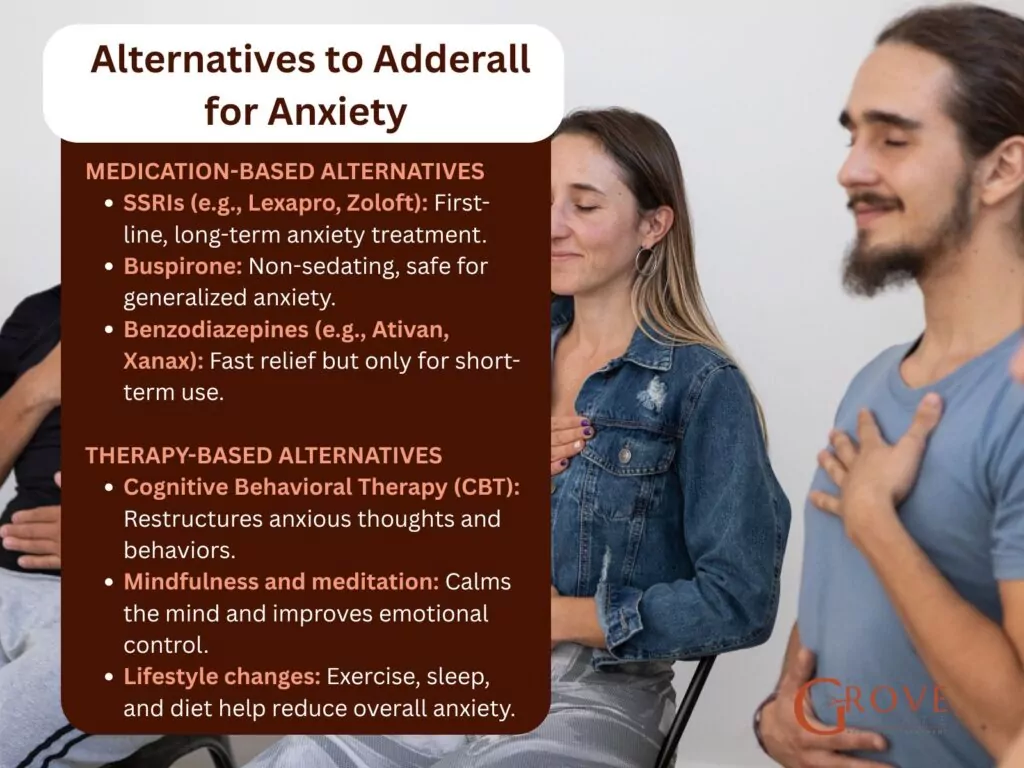
Medication-Based Alternatives:
- SSRIs (e.g., Lexapro, Zoloft): commonly prescribed for long-term anxiety relief
- Buspirone: a non-sedating option for generalized anxiety
- Benzodiazepines (e.g., Ativan, Xanax): fast-acting but intended for short-term use only
Therapy-Based Alternatives:
- Cognitive Behavioral Therapy (CBT): helps identify and change anxious thought patterns
- Mindfulness and meditation: reduce stress and promote emotional regulation
- Lifestyle changes: regular exercise, sleep hygiene, and nutrition support mental well-being
These approaches are used alone or combined, depending on individual needs and guidance from a healthcare provider.
What are Off-Label and Non-Medical Uses of Adderall?
The off-label and non-medical uses of Adderall include a range of purposes that go beyond its approved treatment for ADHD and narcolepsy. While some of these uses occur under medical supervision, many involve misuse, which leads to serious side effects and health risks.
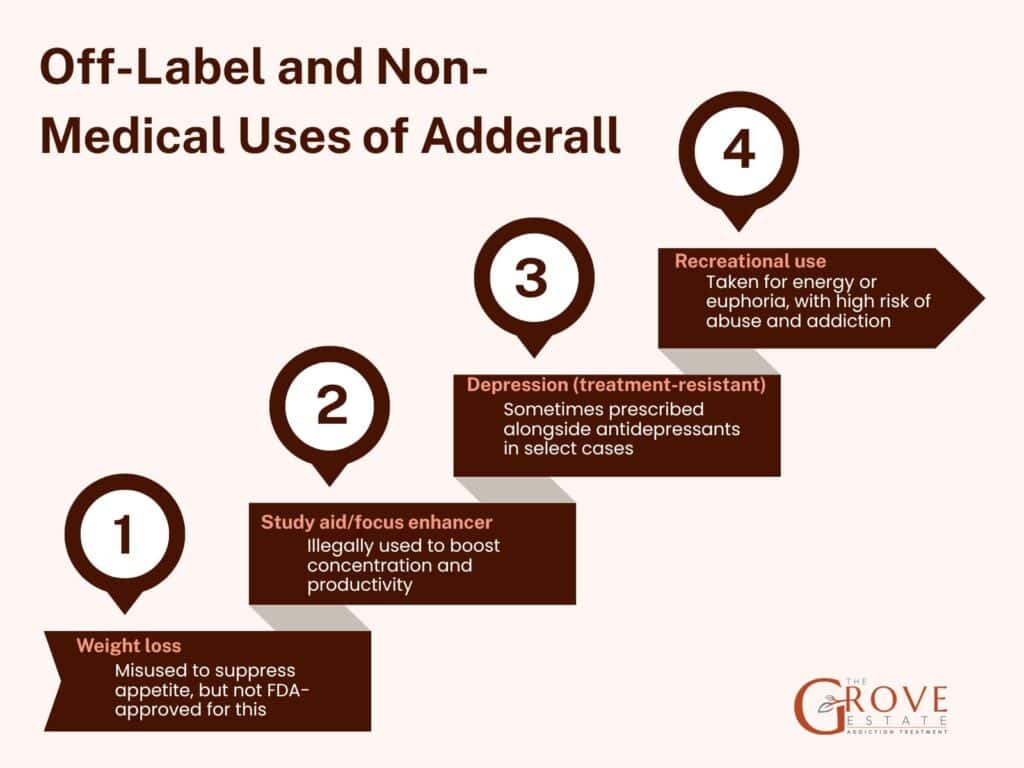
The off-label and non-medical uses of Adderall include:
- Weight loss: used for appetite suppression, though not approved for this purpose.
- Study aid or focus enhancer: commonly misused by students or workers to improve concentration.
- Depression (treatment-resistant cases): occasionally prescribed alongside antidepressants in select cases.
- Recreational use: taken for its energizing or euphoric effects, often leading to dependency or abuse.
Can Adderall Make Anxiety Worse?
Yes, Adderall can make anxiety worse. As a stimulant, Adderall increases activity in the brain and central nervous system, which leads to heightened heart rate, restlessness, and nervousness, all of which intensify anxiety symptoms. While it helps people with ADHD improve focus, it is not designed to treat anxiety and trigger or worsen panic attacks, irritability, and sleep disturbances, especially in those without ADHD or with pre-existing anxiety disorders. Proper diagnosis and medical supervision are essential to avoid these effects.
Are you covered for treatment?
The Grove Estate is an approved provider for Blue Cross Blue Shield and Cigna, while also accepting many other major insurance carriers.
Check Coverage Now!Does Adderall Help with Anxiety if You Have ADHD?
Yes, Adderall helps with anxiety if you have ADHD, but only indirectly. For individuals with both ADHD and anxiety, Adderall improves focus, organization, and task completion, which reduces anxiety caused by feeling overwhelmed or disorganized. However, it does not treat anxiety itself and still causes side effects like nervousness or restlessness in some people. The impact varies from person to person, so treatment should always be tailored and monitored by a healthcare provider. Where anxiety has been self-managed with benzodiazepines instead, our xanax rehab program treats that dependence directly.
Is it Safe to Take Adderall for Anxiety?
No, it is not safe to take Adderall specifically for anxiety. Adderall is a stimulant meant to treat ADHD and narcolepsy, not anxiety. It worsens anxiety symptoms such as restlessness, rapid heart rate, and irritability, especially in people without ADHD. In 2022, 23.1% of U.S. adults — 59.3 million people — experienced any mental illness, anxiety disorders among them (National Institute of Mental Health, drawing on SAMHSA’s National Survey on Drug Use and Health). Using Adderall to manage anxiety without medical guidance leads to increased mental and physical stress, dependence, and other health risks. Safer, more effective treatments like SSRIs, therapy, or non-stimulant medications are recommended for anxiety. Where anxiety and stimulant use occur together, dual diagnosis treatment treats both conditions in one plan.
What are Better Medications for Anxiety than Adderall?
Yes, there are better medications for anxiety than Adderall. While Adderall is effective for managing ADHD, it is not designed to treat anxiety and make symptoms like nervousness, restlessness, and insomnia worse. Medications that are specifically approved for anxiety, such as SSRIs (like Lexapro or Zoloft), SNRIs (like Effexor), Buspirone, or short-term benzodiazepines (like Ativan), are much safer and more effective options. These drugs work by calming overactive brain pathways associated with anxiety, offering more targeted and lasting relief without the stimulating side effects of Adderall.
Share This Post

The Grove Editorial Team
All author posts
ADDICTION TREATMENTS IN INDIANA
Are you covered for treatment?








The Grove Estate is an approved provider for Blue Shield of California and Cigna, while also accepting many other major insurance carriers.
Check Coverage Now!