Methocarbamol and Alcohol: Is It Safe to Mix Them?

Methocarbamol and alcohol are not a safe pairing, because methocarbamol (Robaxin) is a central nervous system depressant and its FDA label warns about combined effects with alcohol. Together they stack drowsiness, dizziness and impaired driving. MedlinePlus adds that alcohol can make methocarbamol side effects worse.
The level of risk depends on how recently the last dose was taken, how much the person drinks and how healthy the liver is. Methocarbamol clears quickly in a healthy adult, but alcohol-related cirrhosis slows how fast the body removes it. That difference changes how long a person should wait before drinking.
The FDA label also reports that methocarbamol overdose frequently involves alcohol or other CNS depressants, the sedating drugs that slow the brain and nervous system. Knowing the overdose warning signs, and when mixing the two points to alcohol use disorder (AUD), helps a worried reader act early.
Key Takeaways
- The FDA-approved methocarbamol label states that patients “should be cautioned about combined effects with alcohol and other CNS depressants.”
- Methocarbamol has a mean plasma elimination half-life of 1 to 2 hours in healthy volunteers.
- In 8 patients with cirrhosis secondary to alcohol use, methocarbamol clearance fell about 70% and the half-life rose to 3.38 hours from 1.11 hours.
- The methocarbamol label reports that overdose “is frequently in conjunction with alcohol or other CNS depressants,” and that deaths have been reported.
Did you know most health insurance plans cover substance use disorder treatment? Check your coverage online now.
Can You Drink Alcohol While Taking Methocarbamol?
No, skip alcohol while taking methocarbamol, because the FDA label describes methocarbamol as a central nervous system (CNS) depressant. The label states that patients “should be cautioned about combined effects with alcohol and other CNS depressants.” MedlinePlus adds that alcohol can make methocarbamol side effects worse.
Methocarbamol is a prescription muscle relaxer sold as generic tablets and under the brand name Robaxin. The methocarbamol label describes the drug as “a carbamate derivative of guaifenesin” with “sedative and musculoskeletal relaxant properties.” Methocarbamol tablets come in 2 strengths, 500 mg and 750 mg.
Prescribers use methocarbamol alongside rest and physical therapy for short-term, painful muscle and joint conditions. The methocarbamol label states that methocarbamol “does not directly relax tense skeletal muscles in man.” The label links methocarbamol’s effect to general CNS depression, the same slowing of brain activity that alcohol produces.
The methocarbamol label uses caution wording, not an outright ban. MedlinePlus tells patients to talk to a doctor about the safe use of alcohol during methocarbamol treatment, which makes the prescriber the right person to set any limit for a specific patient.
What Happens When You Mix Methocarbamol and Alcohol?
Mixing methocarbamol and alcohol adds one CNS depressant to another, which deepens drowsiness, dizziness and loss of coordination. The methocarbamol label warns that methocarbamol may impair the mental and physical abilities needed to drive a car or operate machinery.
The methocarbamol label lists 6 side effects that matter most when alcohol is added:
- Drowsiness: sleepiness that slows reaction time behind the wheel.
- Dizziness: lightheadedness that raises the chance of a fall.
- Confusion: muddled thinking and poor judgment.
- Muscular incoordination: clumsy, unsteady movement.
- Blurred vision: trouble focusing the eyes.
- Amnesia: gaps in memory for events during the effect.
The National Institute on Alcohol Abuse and Alcoholism (NIAAA) lists 8 reactions when alcohol mixes with cyclobenzaprine (Flexeril) or carisoprodol (Soma), including drowsiness, slowed breathing and increased overdose risk. Methocarbamol does not appear on that NIAAA table, but the methocarbamol label carries the same alcohol caution.
NIAAA warns that combining alcohol with some medicines raises the risk of falls and serious injuries, especially among older people. The methocarbamol label reports a slightly longer half-life in healthy older adults, 1.5 hours compared with 1.1 hours in younger adults.
Other sedating drugs on the NIAAA table include alprazolam (Xanax), oxycodone (Percocet) and zolpidem (Ambien), and each one belongs on any list of dangerous drug and alcohol interactions.
How Long After Taking Methocarbamol Can You Drink Alcohol?
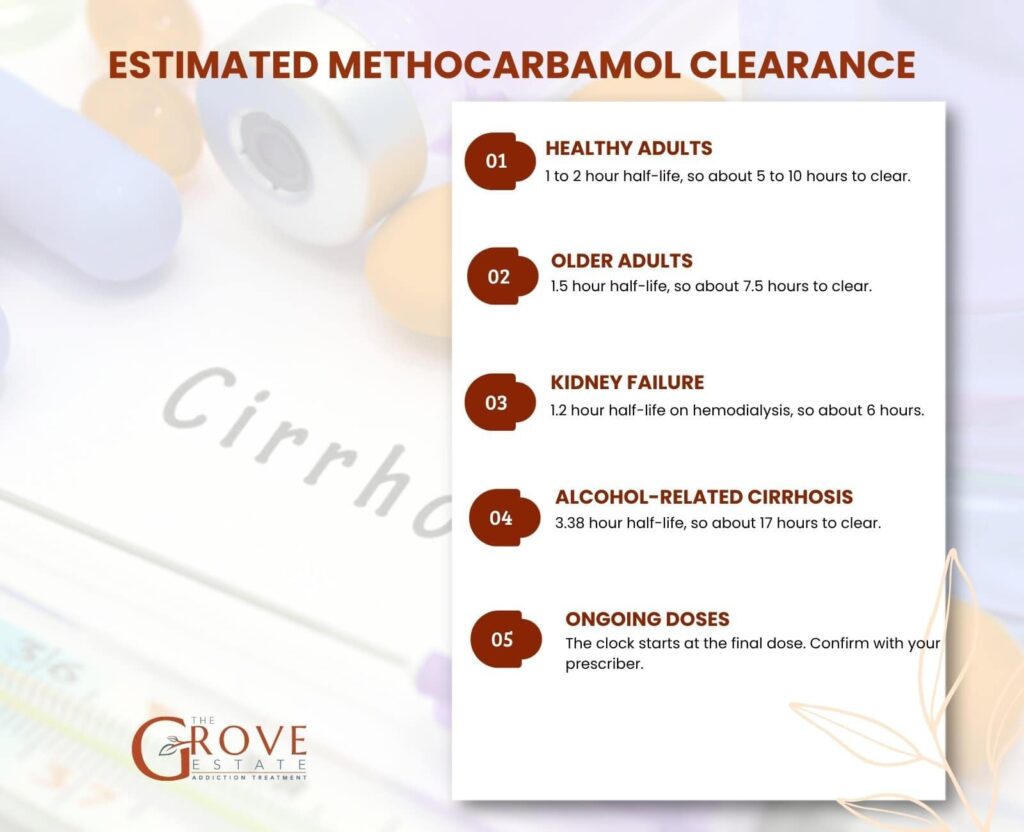
The methocarbamol label sets no waiting period, but a healthy adult clears a dose in an estimated 5 to 10 hours. That estimate applies a 5 half-life clearance rule from intensive care practice to the label’s 1 to 2 hour half-life. Liver damage lengthens that time.
A half-life is the time the body takes to remove half of a drug from the blood. A 2026 Critical Care review by Farrokh and colleagues reports that brain death testing guidelines allow at least 5 half-lives for CNS-depressing drugs to clear, and longer with kidney or liver dysfunction.
The table below applies that 5 half-life rule to the mean methocarbamol half-lives the FDA label reports for 4 patient groups.
| Patient group (FDA label) | Mean methocarbamol half-life | Estimated clearance time (5 half-lives) |
|---|---|---|
| Healthy adult volunteers | 1 to 2 hours | About 5 to 10 hours |
| Healthy older adults (mean age 69) | 1.5 hours | About 7.5 hours |
| Kidney failure on hemodialysis | 1.2 hours | About 6 hours |
| Cirrhosis secondary to alcohol use | 3.38 hours | About 17 hours |
The label reports one half-life range for both the 500 mg and 750 mg tablets and does not split clearance by tablet strength. The 750 mg maintenance schedule of 1 tablet every 4 hours keeps methocarbamol in the blood for the whole course, because a 4-hour gap is shorter than the clearance estimate.
NIAAA states that “alcohol and medicines can interact harmfully even if they are not taken at the same time.” The clearance clock starts at the final methocarbamol dose, not at the first dose of the day.
Common misconception: a muscle relaxer wears off in a few hours, so drinking that night is safe.
What the evidence shows: the FDA methocarbamol label reports a 1 to 2 hour half-life, so a healthy adult carries methocarbamol for an estimated 5 to 10 hours after an evening dose. Alcohol-related cirrhosis triples the half-life to 3.38 hours, stretching clearance to about 17 hours.
Contact us today to schedule an initial assessment or to learn more about our services. Whether you are seeking rehab treatment or simply need guidance on your recovery journey, we are here to help.
Why Does Heavy Drinking Change How the Body Clears Methocarbamol?
Heavy drinking that scars the liver slows methocarbamol clearance. In 8 patients with cirrhosis secondary to alcohol use, the FDA label reports that methocarbamol clearance fell about 70% and the half-life rose to 3.38 hours from 1.11 hours.
The body breaks down methocarbamol through dealkylation and hydroxylation, two chemical steps that prepare the drug for removal. The kidneys then excrete the methocarbamol metabolites in urine. NIAAA states that heavy drinking takes a toll on the liver and lists alcohol-associated cirrhosis among the liver problems heavy drinking produces.
The same label study found that the share of methocarbamol bound to blood proteins dropped to about 40 to 45% in the cirrhosis group, compared with 46 to 50% in matched healthy adults. The study compared 8 cirrhosis patients against 8 age- and weight-matched healthy adults.
NIAAA defines heavy drinking for men as 5 or more drinks on any day or 15 or more per week. For women, NIAAA sets the heavy drinking line at 4 or more drinks on any day or 8 or more per week.
The label study measured people who already had cirrhosis. The methocarbamol label does not report clearance figures for heavy drinkers whose livers are still healthy, so the cirrhosis figures apply to people with alcohol-related liver damage.
Can Methocarbamol and Alcohol Cause an Overdose?
Yes, methocarbamol overdose frequently involves alcohol, and the FDA label reports deaths from overdose of methocarbamol alone or combined with alcohol, other CNS depressants or psychotropic drugs. The label states that overdose “is frequently in conjunction with alcohol or other CNS depressants.”
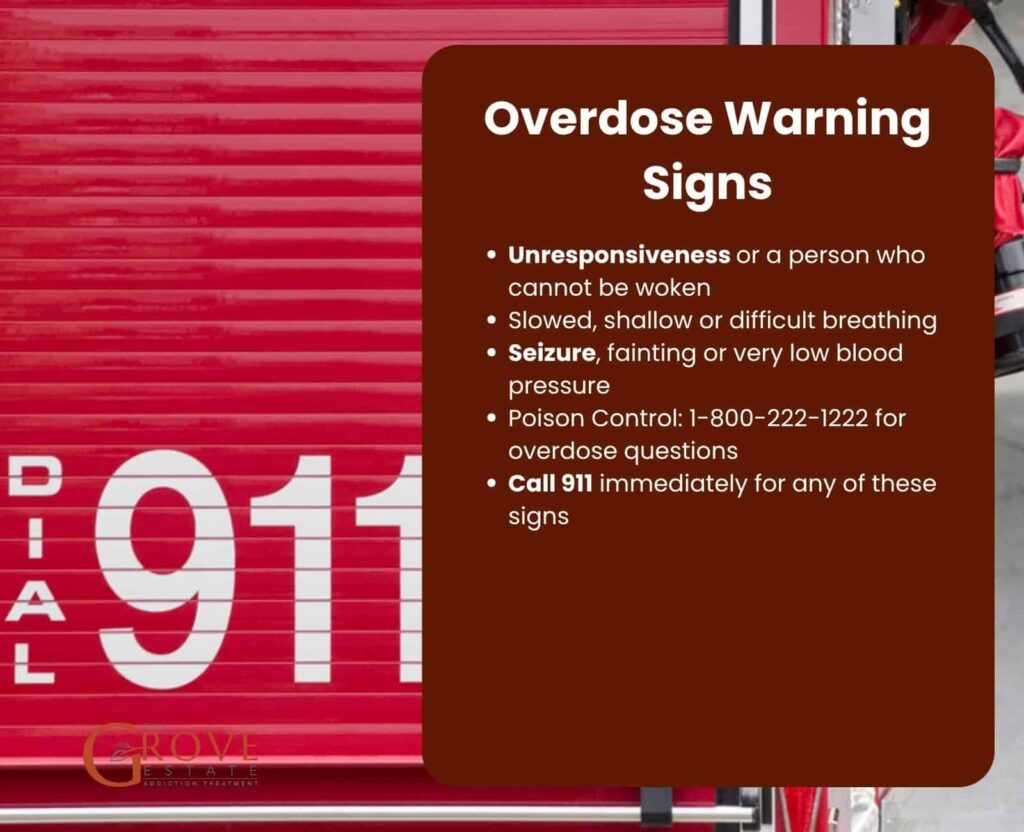
The methocarbamol label lists 6 overdose symptoms:
- Nausea
- Drowsiness
- Blurred vision
- Hypotension (low blood pressure)
- Seizures
- Coma
Ferslew, Hagardorn and McCormick of East Tennessee State University described a fatal accidental poisoning in the Journal of Forensic Sciences in 1990. The person’s blood alcohol concentration was 0.135%, above the 0.08% level NIAAA uses to define binge drinking.
The same 1990 case report measured blood methocarbamol at 257 micrograms per milliliter, against a therapeutic range of 24 to 41 micrograms per milliliter. That case combined a methocarbamol level far above the therapeutic range with alcohol intoxication, not one tablet with one drink.
The methocarbamol label lists overdose care as symptomatic and supportive treatment, including keeping the airway open and monitoring vital signs.
Emergency Warning Signs
There are 5 emergency warning signs after mixing methocarbamol and alcohol, drawn from the methocarbamol label, NIAAA and MedlinePlus:
- Unresponsiveness: the person cannot be woken or slips into a coma.
- Breathing trouble: slowed, shallow or difficult breathing.
- Seizure: shaking, stiffening or a sudden collapse.
- Fainting: passing out or very low blood pressure.
- Extreme drowsiness: confusion or sleepiness that keeps getting worse.
Call 911 immediately for any of these signs. MedlinePlus directs overdose questions to the Poison Control helpline at 1-800-222-1222, and to 911 when the person has collapsed, had a seizure, has trouble breathing or cannot be awakened.
Are you covered for treatment?
The Grove Estate is in-network with Blue Cross Blue Shield and Physicians Health Plan of Northern Indiana, and accepts other commercial plans, such as Cigna and UnitedHealthcare, on an out-of-network basis.
Check Coverage Now!Is Methocarbamol Safer Than Cyclobenzaprine With Alcohol?
No, neither FDA label calls its muscle relaxer safe with alcohol. Methocarbamol leaves the body faster, with a 1 to 2 hour half-life against 18 hours for cyclobenzaprine, so the overlap window is shorter. Both labels still warn about combined CNS depression with alcohol.
The comparison table below sets out the alcohol-related figures from the FDA labels for methocarbamol and immediate-release cyclobenzaprine.
| Label item | Methocarbamol | Cyclobenzaprine (immediate release) |
|---|---|---|
| Half-life in healthy adults | 1 to 2 hours | 18 hours (range 8 to 37 hours) |
| Estimated clearance time (5 half-lives) | About 5 to 10 hours | About 90 hours |
| Alcohol wording on the label | Patients “should be cautioned about combined effects with alcohol and other CNS depressants” | Cyclobenzaprine “may enhance the effects of alcohol, barbiturates, and other CNS depressants” |
| Liver finding on the label | Clearance down about 70% in cirrhosis secondary to alcohol use | Blood levels about double in hepatic impairment; not recommended in moderate to severe impairment |
The cyclobenzaprine label states that cyclobenzaprine “is eliminated quite slowly.” At 5 half-lives, cyclobenzaprine needs about 90 hours to clear, so the waiting time for cyclobenzaprine and alcohol runs to days, not hours.
Faster clearance is only one point in the methocarbamol vs cyclobenzaprine comparison, and it does not make either drug safe with alcohol.
When Does Mixing Methocarbamol and Alcohol Point to Alcohol Use Disorder?
Mixing methocarbamol and alcohol does not by itself mean alcohol use disorder (AUD). NIAAA defines AUD as an impaired ability to stop or control alcohol use despite adverse social, occupational, or health consequences, and a diagnosis needs at least 2 criteria.
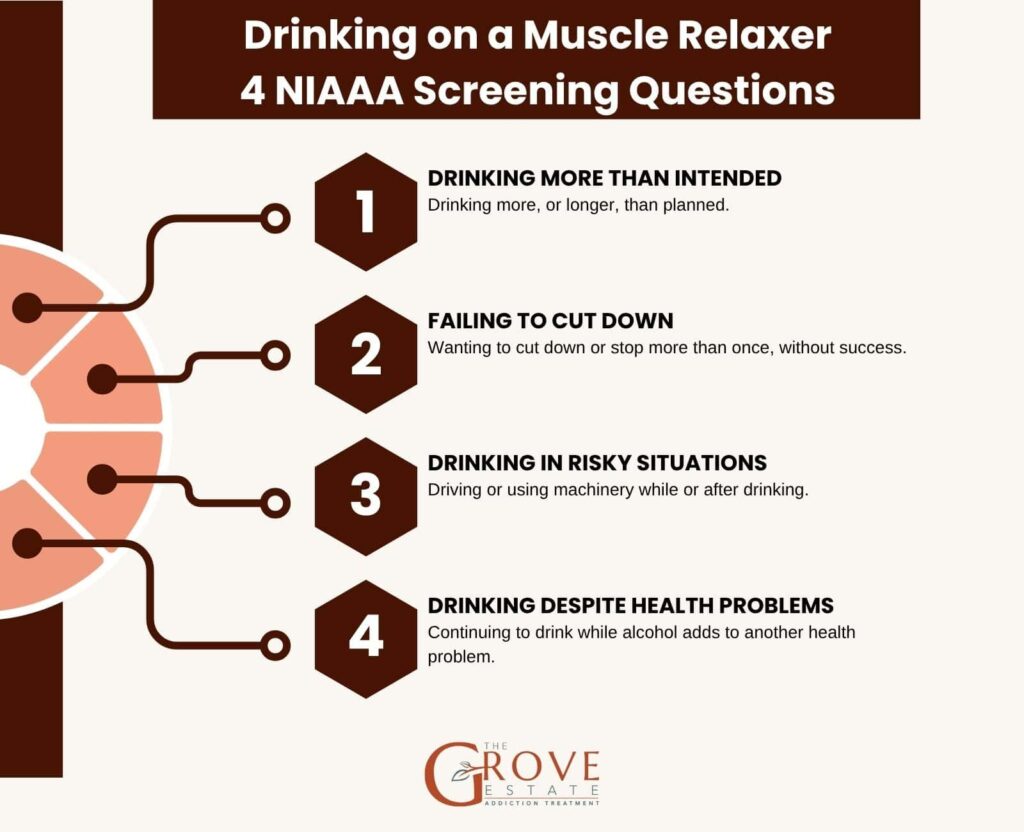
NIAAA rates AUD as mild with 2 to 3 criteria, moderate with 4 to 5 criteria and severe with 6 or more. There are 4 NIAAA screening questions that apply directly to drinking on a muscle relaxer:
- Drinking more than intended: drinking more, or longer, than planned.
- Failing to cut down: wanting to cut down or stop more than once, without success.
- Drinking in risky situations: driving or using machinery while or after drinking.
- Drinking despite health problems: continuing to drink while alcohol adds to another health problem.
NIAAA warns that people with severe AUD may need medical help when stopping, because alcohol withdrawal syndrome is a potentially life-threatening process. A person with severe AUD who also takes methocarbamol carries both the sedation risk and the withdrawal risk.
The Grove Estate in Peru, Indiana, provides residential addiction treatment for adults. Residential detox at The Grove Estate means withdrawal management within residential treatment, with 24-hour nursing oversight and physician-directed medication.
“When a person arrives taking methocarbamol or another sedating prescription, a physician reviews that medication against the person’s drinking history. In a 24-hour residential setting, our nurses then watch for added drowsiness around the clock.”
Dr. Steven Schneider, Medical Director, The Grove Estate
Adults who recognize AUD criteria in their own drinking can continue from withdrawal management into residential alcohol rehab at The Grove Estate.
Frequently Asked Questions
Rediscover Life at The Grove Estate
Get the compassionate mental health support you deserve. We're here to help you reclaim joy, wellness, and a brighter future.
Our Facility
Is Robaxin the same as methocarbamol?
Yes. Robaxin is a brand name for methocarbamol, according to MedlinePlus. Generic methocarbamol tablets come in 500 mg and 750 mg strengths, and both carry the same alcohol caution on the FDA label.
Can I drink the day after taking methocarbamol?
Only after asking the prescriber. The 750 mg maintenance schedule allows 1 tablet every 4 hours, so a person still taking daily doses has little methocarbamol-free time. MedlinePlus advises talking to a doctor about safe alcohol use.
Can you take methocarbamol after drinking?
Taking methocarbamol after drinking still combines two CNS depressants. NIAAA states that alcohol and medicines can interact harmfully even when taken at different times. Ask the prescriber or pharmacist before taking the next dose.
Did you know most health insurance plans cover substance use disorder treatment? Check your coverage online now.
Is 750 mg of methocarbamol strong?
750 mg is the higher of the 2 methocarbamol tablet strengths. The label’s starting adult dose is 2 tablets of 750 mg 4 times daily, which equals 6 grams a day for the first 48 to 72 hours.
Can one drink with methocarbamol hurt?
The methocarbamol label sets no safe number of drinks. The label cautions patients about combined effects with alcohol, and MedlinePlus states that alcohol makes methocarbamol side effects worse, including drowsiness that impairs driving.
Is methocarbamol riskier with alcohol for older adults?
Yes, older adults face a higher risk. The label reports a 1.5-hour methocarbamol half-life in healthy older adults versus 1.1 hours in younger adults, and NIAAA states that older people face particularly high risk for harmful alcohol-medication interactions.
Contact us today to schedule an initial assessment or to learn more about our services. Whether you are seeking rehab treatment or simply need guidance on your recovery journey, we are here to help.
Can methocarbamol be taken with opioids?
Only under a prescriber’s direction. The Roxicodone (oxycodone) label lists muscle relaxants and alcohol among CNS depressants whose combined use with opioids risks profound sedation, respiratory depression, coma and death.
References
- Granules Pharmaceuticals Inc. (2026). Methocarbamol tablets, USP [Prescribing information]. DailyMed, U.S. National Library of Medicine.
- PD-Rx Pharmaceuticals, Inc. (2026). Cyclobenzaprine hydrochloride tablets, USP [Prescribing information]. DailyMed, U.S. National Library of Medicine. Set ID 3baeda95-d098-437a-b360-87a9c3f3fd9b.
- SpecGx LLC. (2026). Roxicodone (oxycodone hydrochloride) tablets [Prescribing information]. DailyMed, U.S. National Library of Medicine. Set ID 5a8157d3-ba20-4abf-b0d4-6ad141b31d63.
- Ferslew, K. E., Hagardorn, A. N., & McCormick, W. F. (1990). A fatal interaction of methocarbamol and ethanol in an accidental poisoning. Journal of Forensic Sciences, 35(2), 477-482. PMID 2329339.
- Farrokh, S., Cook, A., Feldman, R., George, P., Sarwal, A., Mirski, M., & Shah, V. (2026). Pharmacologic and toxicologic confounders in brain death determination: a multidisciplinary guide. Critical Care, 30, 77. https://doi.org/10.1186/s13054-025-05833-6
- National Institute on Alcohol Abuse and Alcoholism. (n.d.). Harmful interactions: Mixing alcohol with medicines. National Institutes of Health.
- National Institute on Alcohol Abuse and Alcoholism. (n.d.). Understanding alcohol use disorder. National Institutes of Health.
- National Institute on Alcohol Abuse and Alcoholism. (2026). Understanding alcohol drinking patterns. National Institutes of Health.
- National Institute on Alcohol Abuse and Alcoholism. (n.d.). Alcohol’s effects on the body. National Institutes of Health.
- MedlinePlus. (2017). Methocarbamol. U.S. National Library of Medicine; American Society of Health-System Pharmacists.
Share This Post

The Grove Editorial Team
All author posts
ADDICTION TREATMENTS IN INDIANA
Are you covered for treatment?







The Grove Estate is in-network with Blue Cross Blue Shield and Physicians Health Plan of Northern Indiana, and accepts other commercial plans, such as Cigna and UnitedHealthcare, on an out-of-network basis.
Check Coverage Now!